
Everything can be done with budget
The Best Easy Entryway Rug Styling on a Budget: 15 Smart & Stylish Ideas

I’ll be honest, Entryway Rug Styling turned into a bigger decision in my house than I ever expected. My husband and I stood there more than once, staring at the floor, going back and forth about a runner versus a larger rug, each of us convinced we were right. I pictured the space long-term, maybe adding a slim console table behind the couch, and I kept thinking a runner would make everything feel intentional. But walking through that entry every single day made me question whether it actually worked in real life or just in my head.
The more I lived with it, the more Entryway Rug Styling felt less about trends and more about proportion. A wider entry needs a rug that fills the space instead of slicing it in half. Once I imagined a larger rug anchoring the area, everything clicked: the door looked balanced, the traffic flow made sense, and even our entryway paint color felt more finished because the rug grounded it. I realized a runner can look great, but only when the space supports it, not when it fights against it.
Now, when I think about Entryway Rug Styling, I think about how the space actually gets used, muddy shoes, backpacks dropped at the door, and quick hellos and goodbyes. The right rug doesn’t just look good, it makes the entry feel calm and welcoming instead of awkward. Sometimes the best choice isn’t the one you planned for, it’s the one that quietly works every single day without you having to think about it.
Why do you need to choose these Entryway Rug Styling
Choosing the right entryway rug can completely transform the first impression of your home. I’ve realized that this small area often sets the tone for the rest of the space, and a well-chosen rug adds warmth, personality, and functionality. Beyond aesthetics, an entryway rug helps protect your floors from dirt, moisture, and wear, especially in high-traffic areas. I love how a simple rug can instantly make guests feel welcome and make daily routines more comfortable, while reflecting your personal style.
Some helpful tips to consider
When selecting an entryway rug, consider the size, material, and pattern carefully. I always measure the space first to ensure the rug fits perfectly without overcrowding the entryway. Durable materials like wool, polypropylene, or cotton blends work best for areas that see heavy foot traffic, while a rug with a non-slip backing keeps everyone safe. I also like to choose patterns or colors that hide dirt and stains while complementing my home’s décor. Finally, think about maintenance—rugs that are easy to vacuum or shake out make daily life much simpler.
15. Use Flatweave Rugs for High Traffic Areas
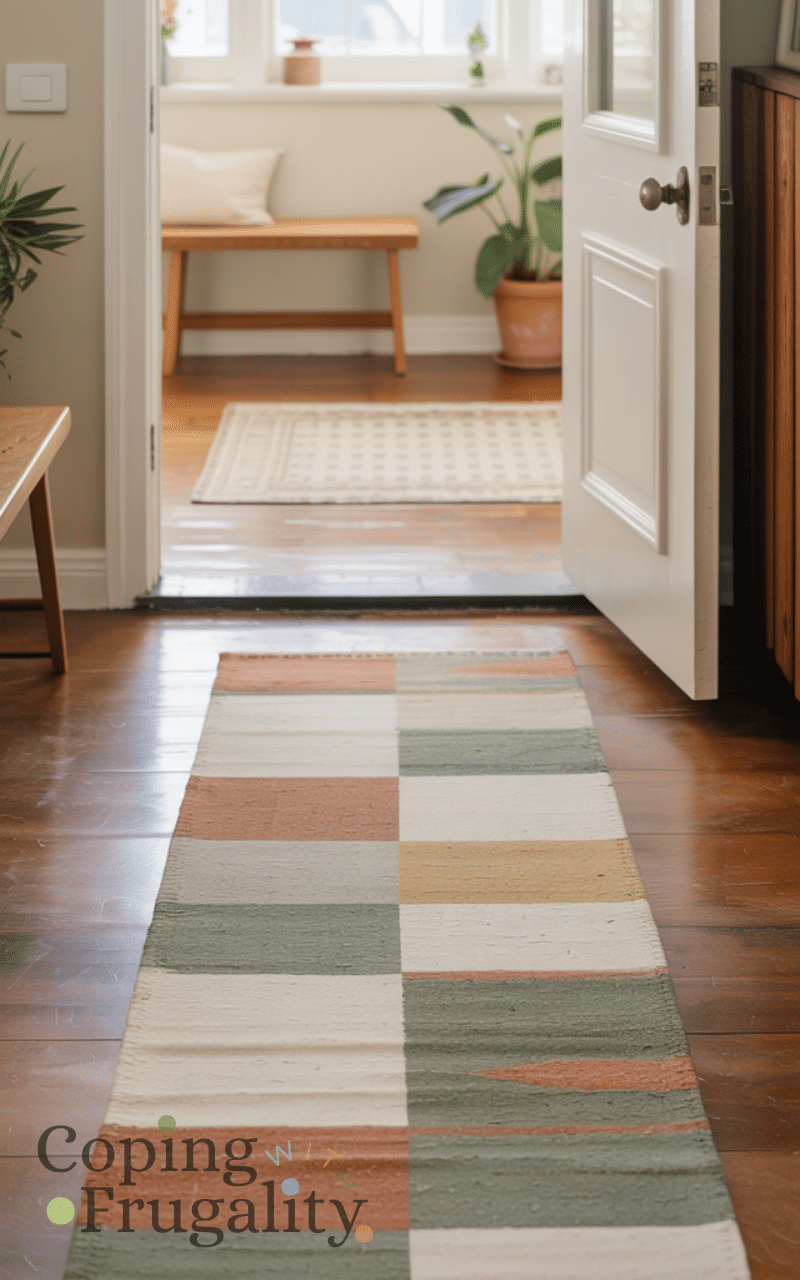
Flatweave rugs are perfect for entryway rug styling on a budget because they are thin, durable, and usually more affordable than plush rugs. They sit flat on the floor, making doors easy to open and close while handling heavy foot traffic. Flatweaves are easy to clean, often reversible, and available in many patterns, so you can refresh your entryway look without replacing furniture. Their lightweight design also allows you to move them easily for cleaning or seasonal updates, making them a smart and economical choice for busy homes.
Flatweave rugs have saved me more frustration than I can count. I usually spend $40–$120 for a good one, and they last far longer in our busy entry than plush styles ever did. My money-saving tip is choosing reversible designs — when one side starts to look worn, I just flip it. Personally, I’ll always recommend flatweave over thick pile in an entry because doors need clearance and crumbs happen daily. The mistake I made early on was choosing something too thin and cheap, which curled at the corners within months.
14. Layer a Small Rug Over a Neutral Base
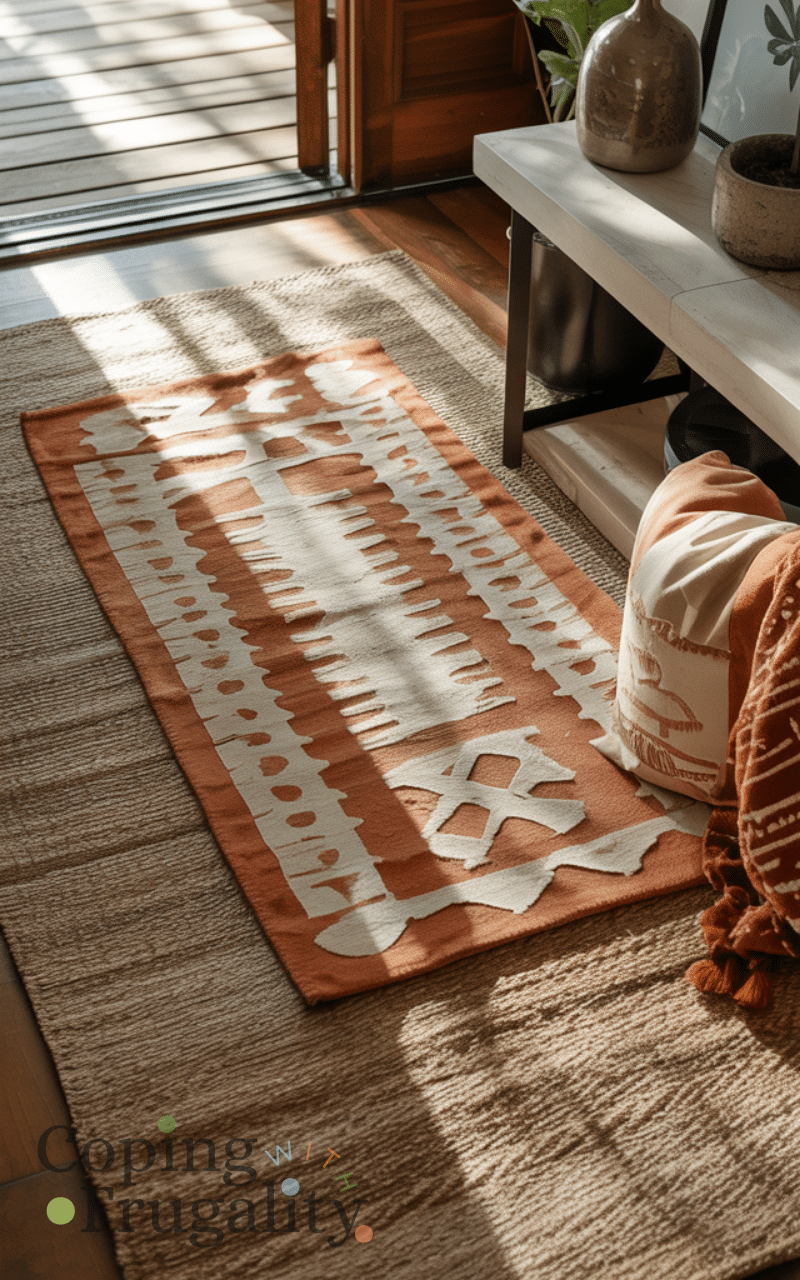
Layering is a stylish trick for entryway rug styling on a budget that adds depth without buying one expensive rug. Start with a simple, neutral base rug like jute or sisal, then layer a smaller patterned rug on top. This creates visual interest and allows you to change the top rug seasonally or when trends change. Layering also protects the base rug from wear while making your entryway feel cozy, curated, and thoughtfully styled at a low cost.
I love the look of layering, but I’ve learned to do it strategically. A basic jute base might cost $60–$150, and a smaller accent rug can be as low as $30–$80, which is still cheaper than one oversized statement piece. I save money by keeping the base neutral so I can swap the top rug seasonally without replacing everything. In my experience, this works best in wider entries — narrow ones can feel cluttered fast. The mistake is skipping a rug pad underneath; without it, everything shifts constantly.
13. Choose Indoor-Outdoor Rugs
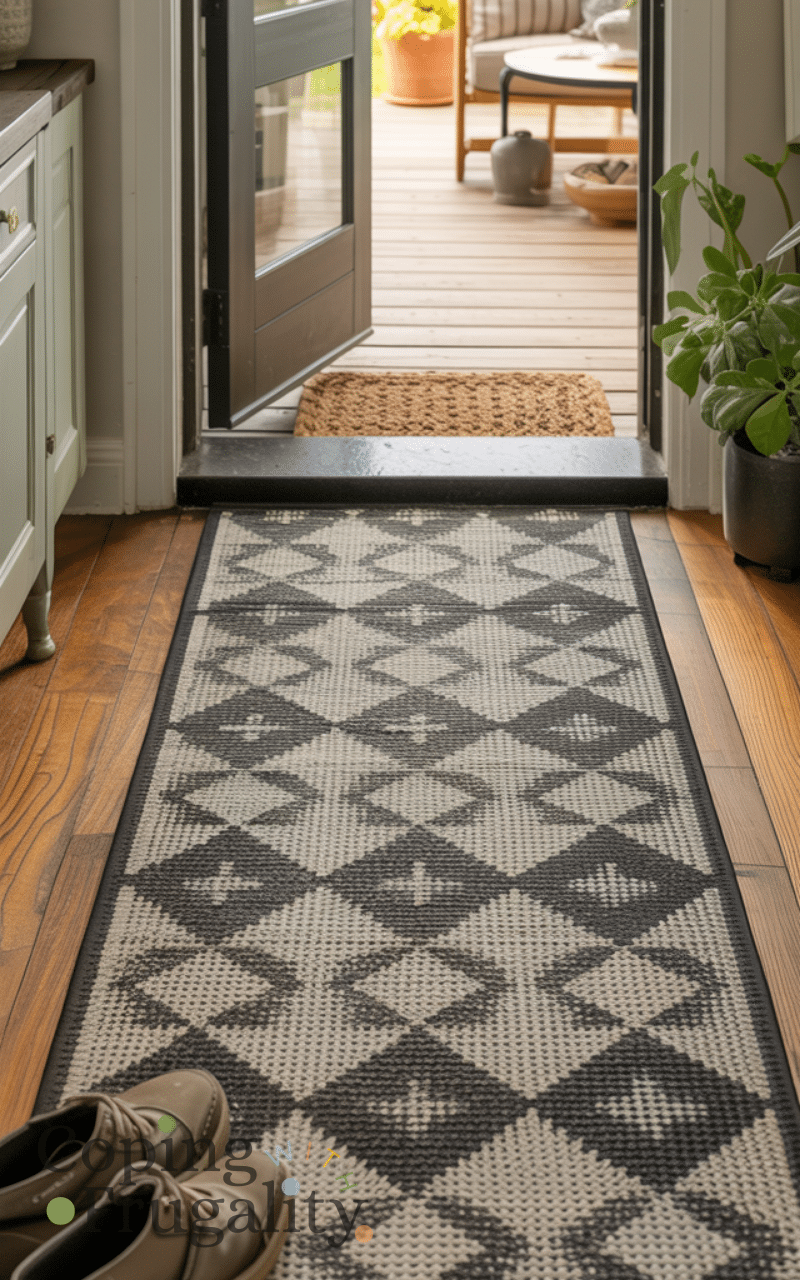
Indoor-outdoor rugs are excellent for entryway rug styling on a budget because they are affordable, durable, and designed to handle dirt and moisture. These rugs resist stains and are easy to clean, making them ideal for busy entryways. They come in stylish patterns and textures that look just as good indoors as outdoors. Using an indoor-outdoor rug helps you save money in the long run since it lasts longer and requires less maintenance than delicate materials.
Indoor-outdoor rugs are honestly underrated. I’ve paid anywhere from $50–$140 for them, and they handle muddy shoes better than anything else I’ve tried. My biggest tip is hosing them off outside instead of deep cleaning — it saves time and cleaning costs. Personally, I prefer subtle patterns so they don’t scream “patio furniture.” The mistake people make is assuming they’ll look plastic-y; many newer designs look surprisingly high-end.
12. Go for Neutral Colors to Save Money
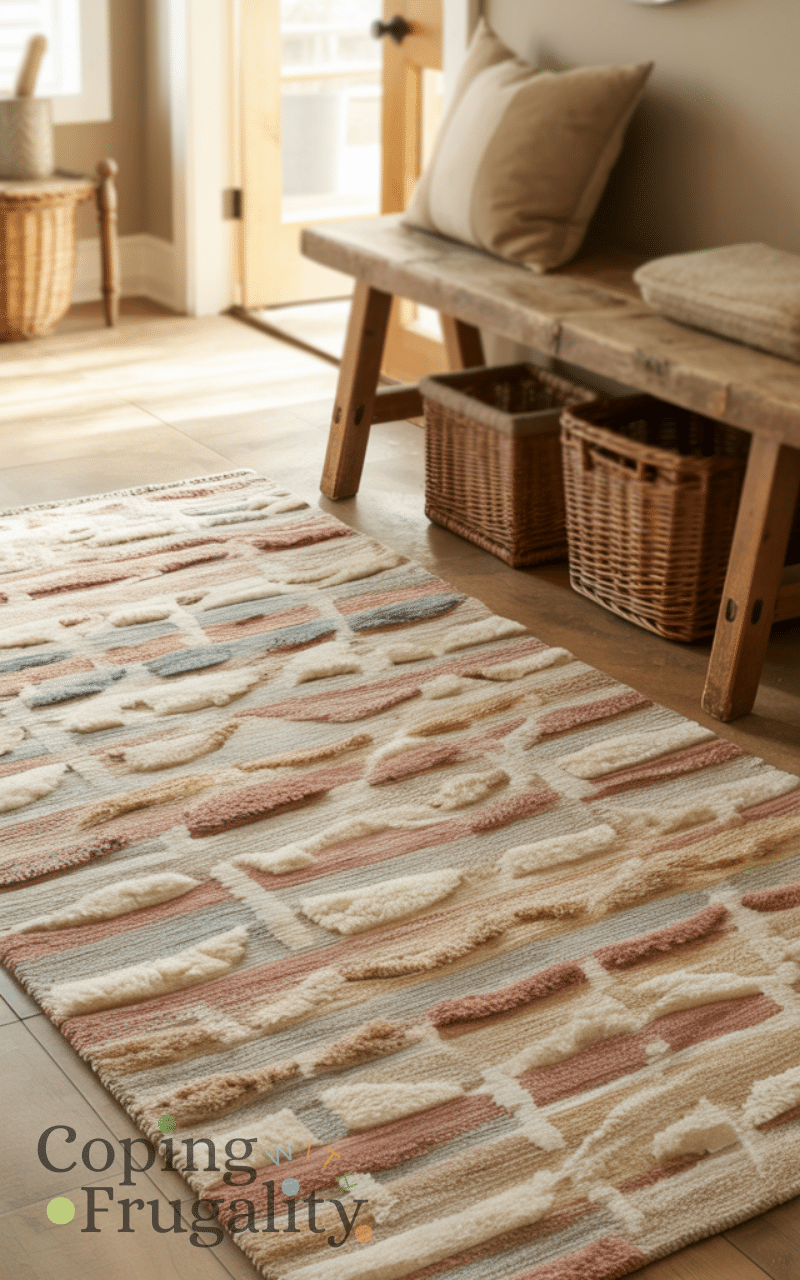
Neutral-colored rugs are timeless and ideal for entryway rug styling on a budget. Shades like beige, gray, tan, or cream are often less expensive and easier to match with existing décor. A neutral rug allows you to change accessories like baskets, mirrors, or wall art without replacing the rug. This flexibility saves money over time while keeping your entryway looking fresh, balanced, and welcoming all year round.
Neutral rugs have been my safest long-term investment. I typically budget $50–$200 depending on size, and they work with everything when I change paint or decor. To save money, I focus on texture instead of bold color — it keeps things interesting without locking me into a palette. I’ll always recommend warm neutrals over cool grays in an entry because they feel more inviting. The mistake is choosing something too light in a high-traffic space unless it’s washable.
11. Buy Remnant or Cut Rugs
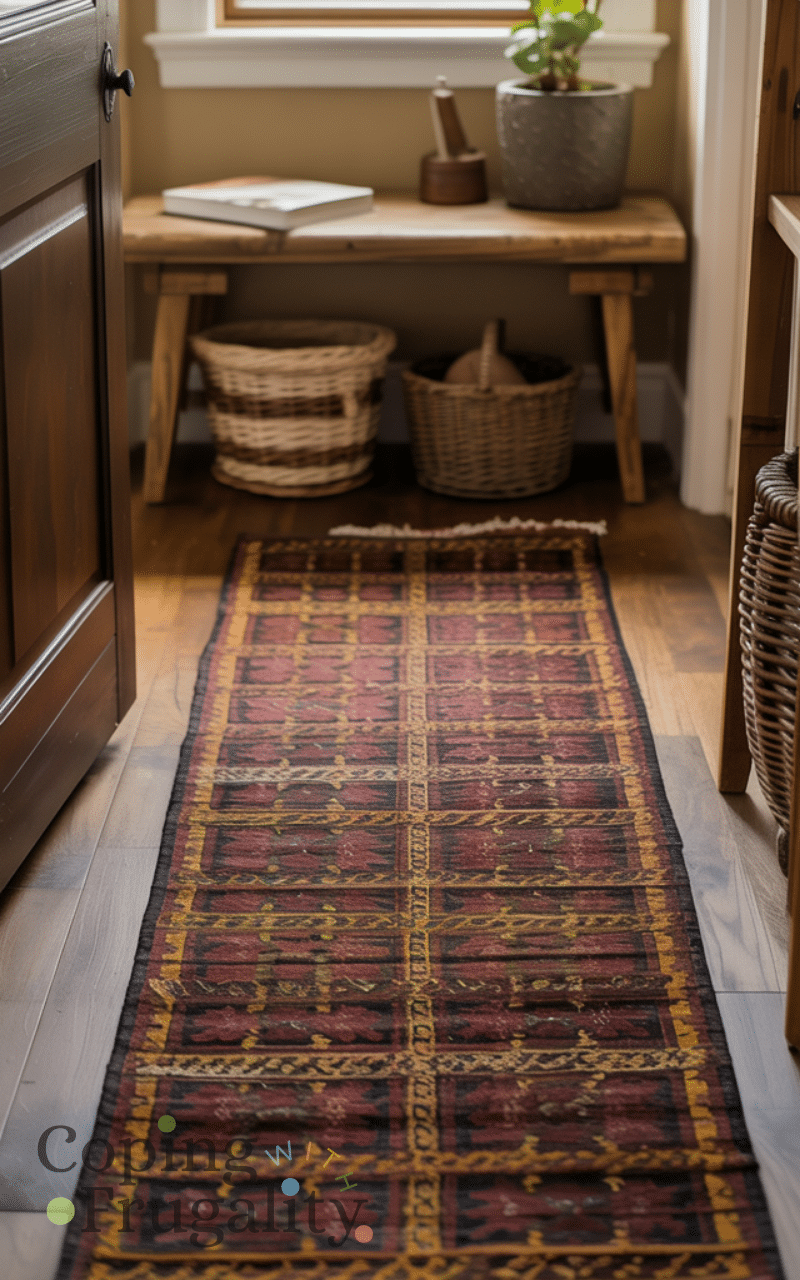
Rug remnants are a hidden gem for entryway rug styling on a budget. These leftover pieces from larger rugs are often sold at discounted prices and can be cut to fit your entryway perfectly. Since entryways are usually small, remnants work well and still look intentional when finished with a simple binding. This approach allows you to enjoy quality materials and unique patterns without paying full price.
Remnants are one of those budget tricks more people should use. I’ve found beautiful pieces for $20–$90, far less than full-sized rugs. Paying a little extra for binding the edges still keeps it affordable. I recommend checking local carpet stores instead of big-box retailers for better quality leftovers. The mistake is not measuring properly before cutting — custom sizes mean no returns.
10. Try Washable Rugs for Easy Maintenance
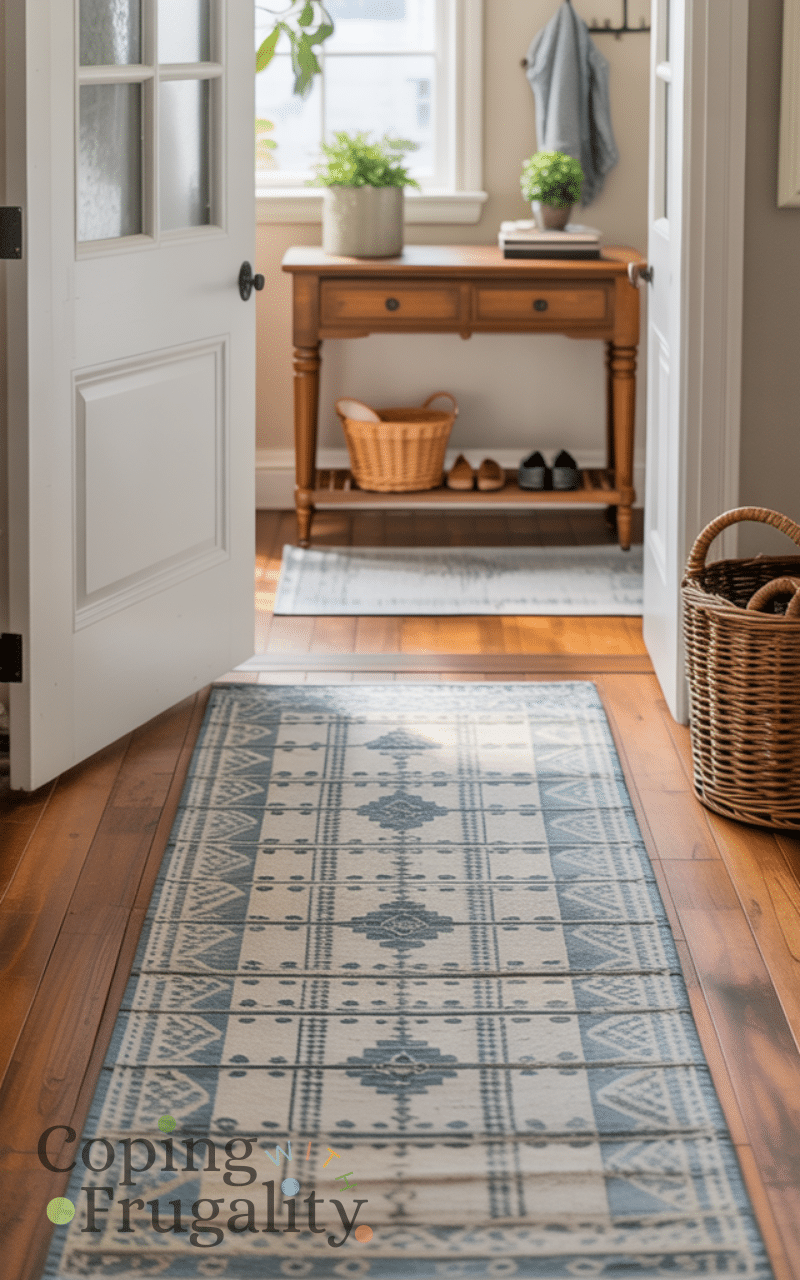
Washable rugs are a smart solution for entryway rug styling on a budget because they reduce cleaning costs and stress. Instead of professional cleaning, you can simply toss them into the washing machine. They are ideal for homes with kids, pets, or frequent guests. Washable rugs come in many stylish designs, making it easy to keep your entryway fresh, clean, and inviting without spending extra money on upkeep.
Washable rugs changed my routine completely. They usually range from $80–$200, which sounds high at first, but I’ve saved on professional cleaning. My money-saving advice is buying one neutral washable rug and using seasonal doormats on top for variety. Personally, I think they’re worth it in homes with kids or pets. The mistake is overloading the washing machine — they’re heavier than they look.
9. Use Runner Rugs for Narrow Entryways
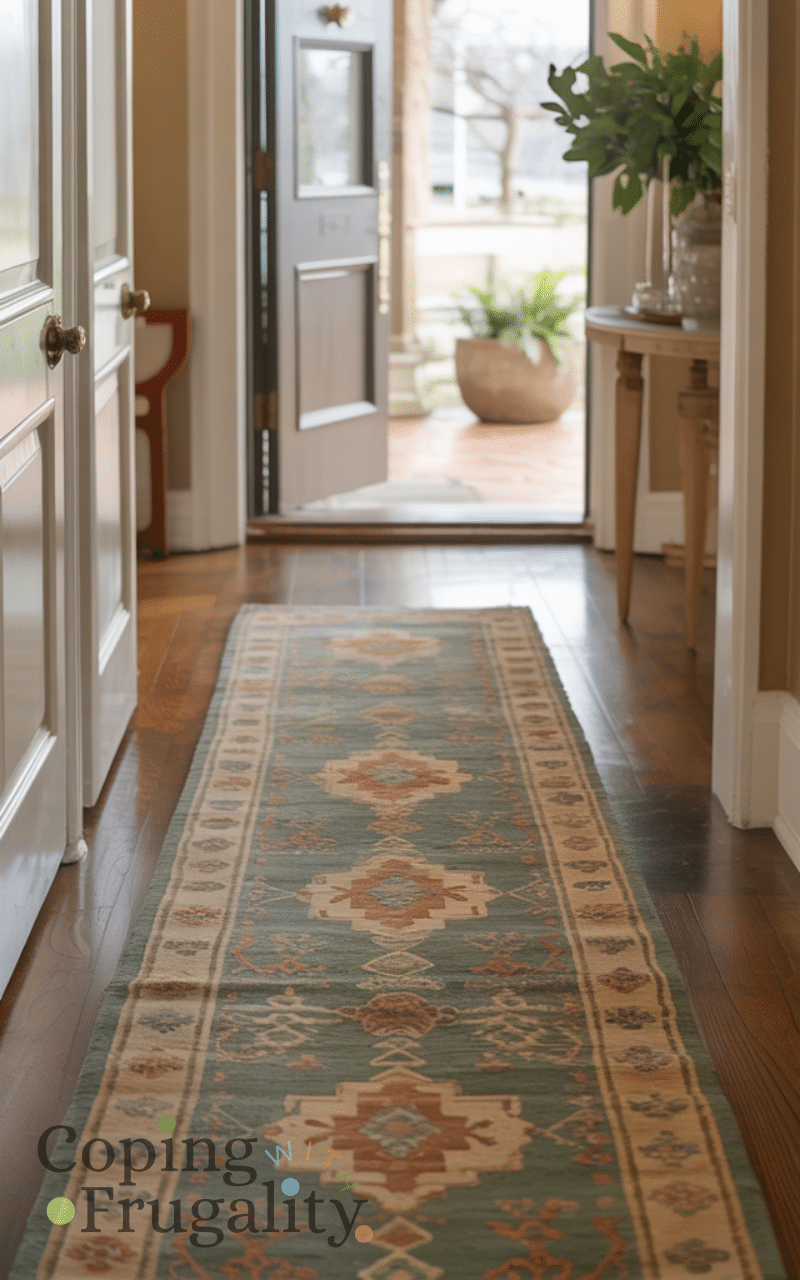
Runner rugs are perfect for long or narrow spaces and work beautifully for entryway rug styling on a budget. They are often more affordable than large area rugs and help visually guide guests into your home. A runner adds warmth and style without overwhelming the space. It also protects flooring in high-traffic zones while making the entryway feel longer, cleaner, and more polished.
I went back and forth on runners in our space, and they truly only work when the proportions are right. A decent runner typically costs $40–$150, making it budget-friendly compared to large rugs. I suggest taping out the size on your floor first to visualize it before buying. In my opinion, runners shine in long, narrow entries but feel awkward in wide ones. The biggest mistake is choosing one that’s too short — it should visually guide the whole walkway.
8. Shop Seasonal Sales and Clearance Sections
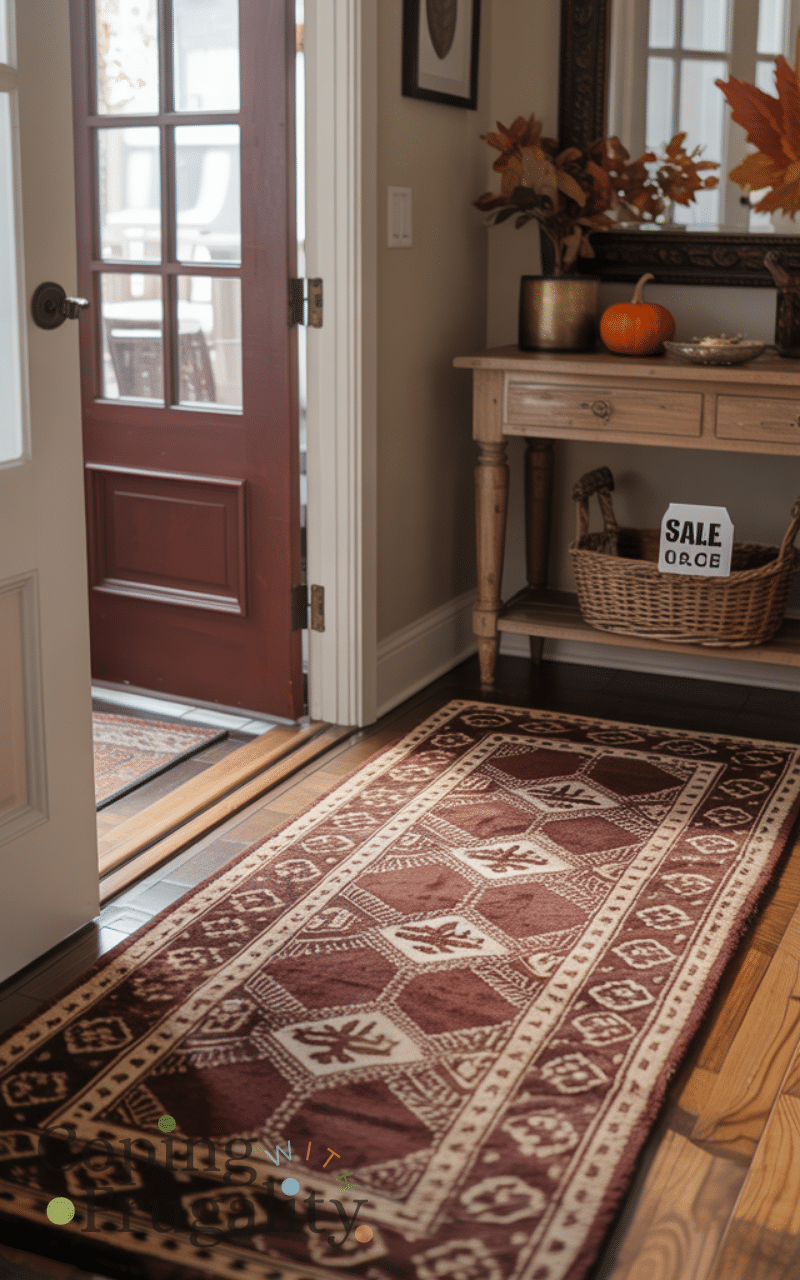
Timing matters when it comes to entryway rug styling on a budget. Shopping during seasonal sales or clearance events can save you a significant amount of money. Many stores discount rugs at the end of seasons or during holiday sales. With patience and planning, you can find stylish, high-quality rugs at a fraction of the original price, making budget-friendly decorating much easier.
I rarely buy rugs at full price anymore. Waiting for sales has saved me 30–60%, especially during holiday weekends. I set a budget — usually $100–$250 — and stick to it, no matter how pretty something looks. My tip is checking return policies before grabbing a clearance deal. The mistake is panic-buying just because it’s discounted; it still needs to work in your space.
7. Choose Low-Pile Rugs for Longevity
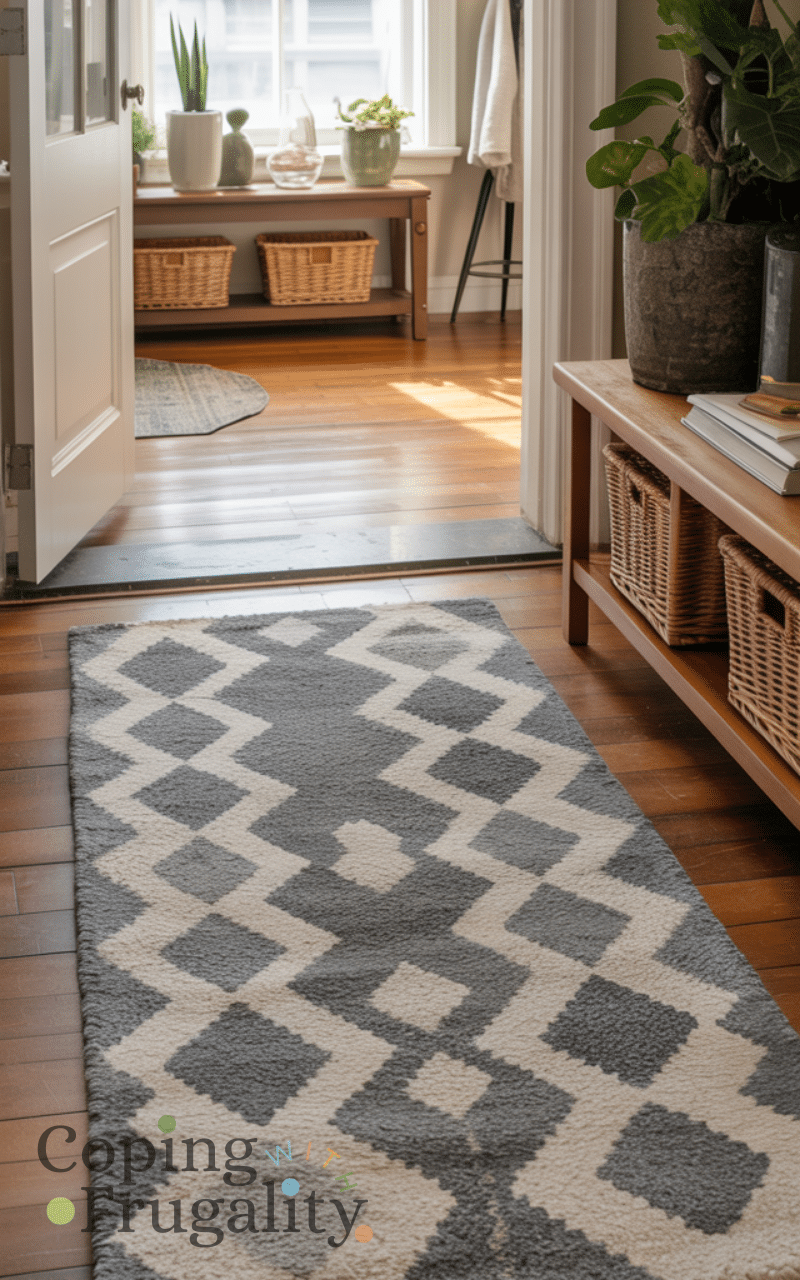
Low-pile rugs are practical for entryway rug styling on a budget because they last longer and show less wear. Their short fibers prevent dirt from settling deep into the rug, making cleaning easier. Low-pile rugs are often more affordable and safer since they reduce the risk of slipping or tripping. This makes them both a cost-effective and functional choice for busy entryways.
Low-pile rugs have held up best in my entry. I usually spend $50–$180, and they vacuum easily without trapping debris. To save money, I avoid trendy high-pile textures that flatten quickly. I strongly recommend low-pile if you open the door directly over the rug. The mistake is thinking thicker equals better — in high-traffic areas, thinner is often smarter.
6. Add a Rug Pad Instead of Replacing the Rug
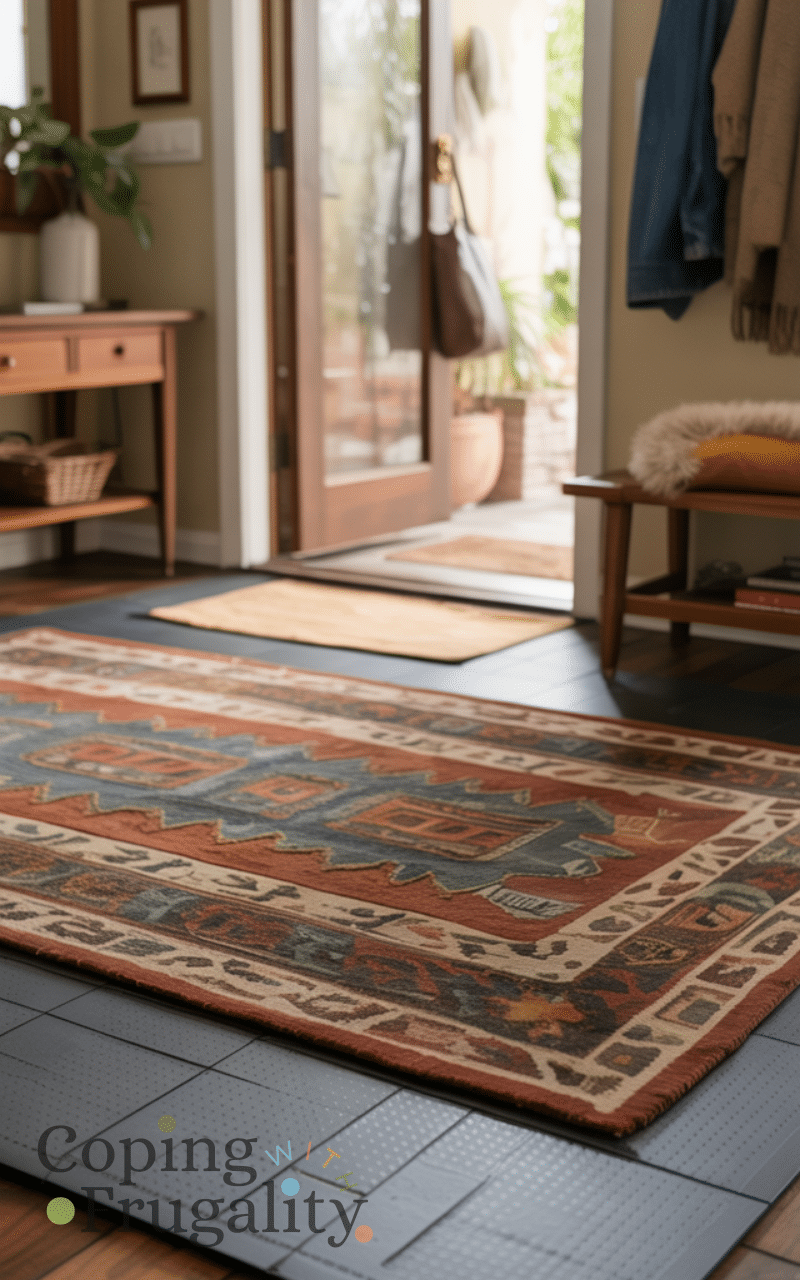
Using a rug pad is a simple trick for entryway rug styling on a budget that extends the life of your rug. A rug pad prevents slipping, adds cushioning, and reduces wear on the rug fibers. This small investment helps your rug look better for longer, meaning you won’t need to replace it as often. It also makes even inexpensive rugs feel more comfortable and secure.
Adding a rug pad for $15–$40 has extended the life of more than one rug in my home. It’s far cheaper than replacing a worn-out piece prematurely. I always trim pads slightly smaller than the rug so edges don’t show. Personally, I consider a pad non-negotiable for safety and comfort. The mistake is skipping it to save money — sliding rugs cause more problems than they solve.
5. Choose Simple Patterns Over Trendy Designs
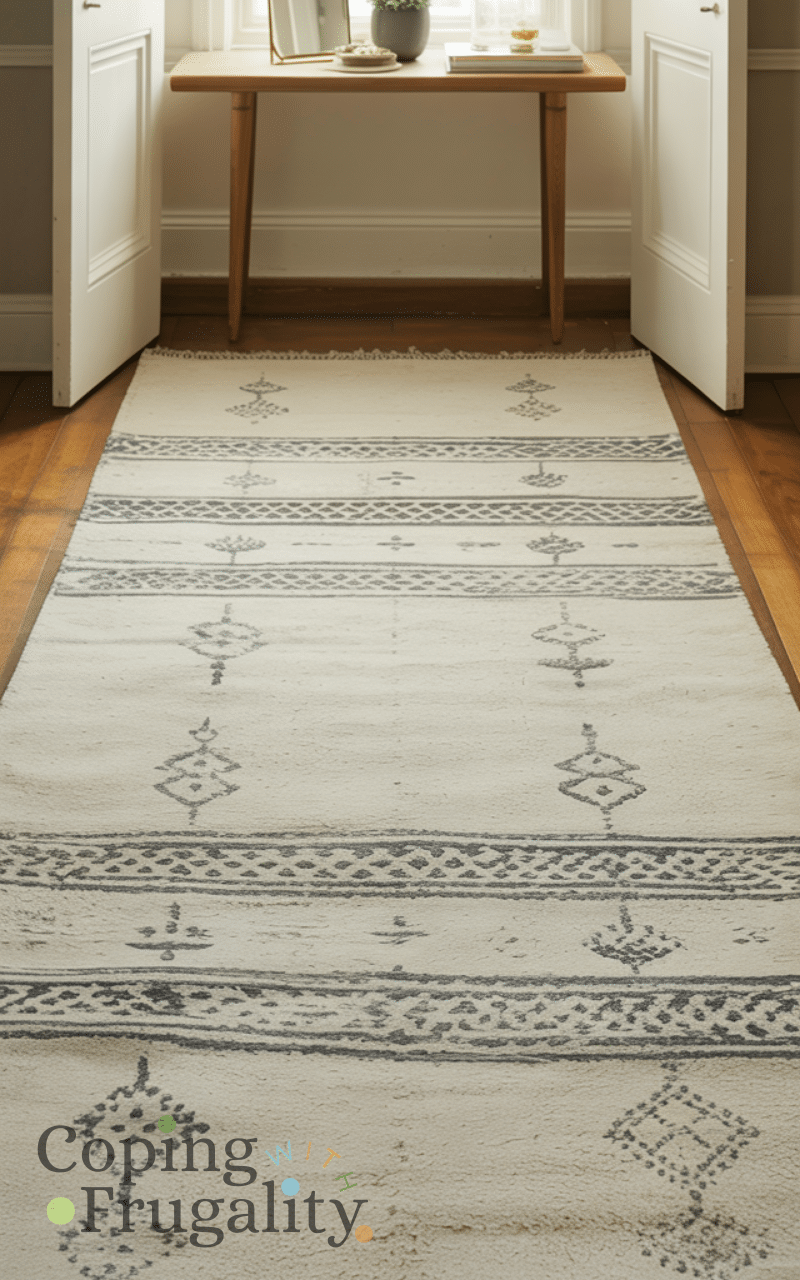
Simple patterns are ideal for entryway rug styling on a budget because they do not go out of style quickly. Stripes, subtle geometrics, or classic motifs stay relevant for years, reducing the need for frequent replacements. Trendy designs may look appealing at first but can feel outdated fast. Choosing simple patterns helps you save money while keeping your entryway stylish and timeless.
I’ve fallen for trendy patterns before, and I regretted it faster than I expected. A timeless patterned rug usually costs $60–$200, and it lasts stylistically much longer. My money-saving tip is sticking to stripes or subtle geometrics that won’t date your space. In my experience, simple designs blend better with evolving decor. The mistake is choosing something bold that limits future paint or furniture choices.
4. Repurpose Rugs from Other Rooms
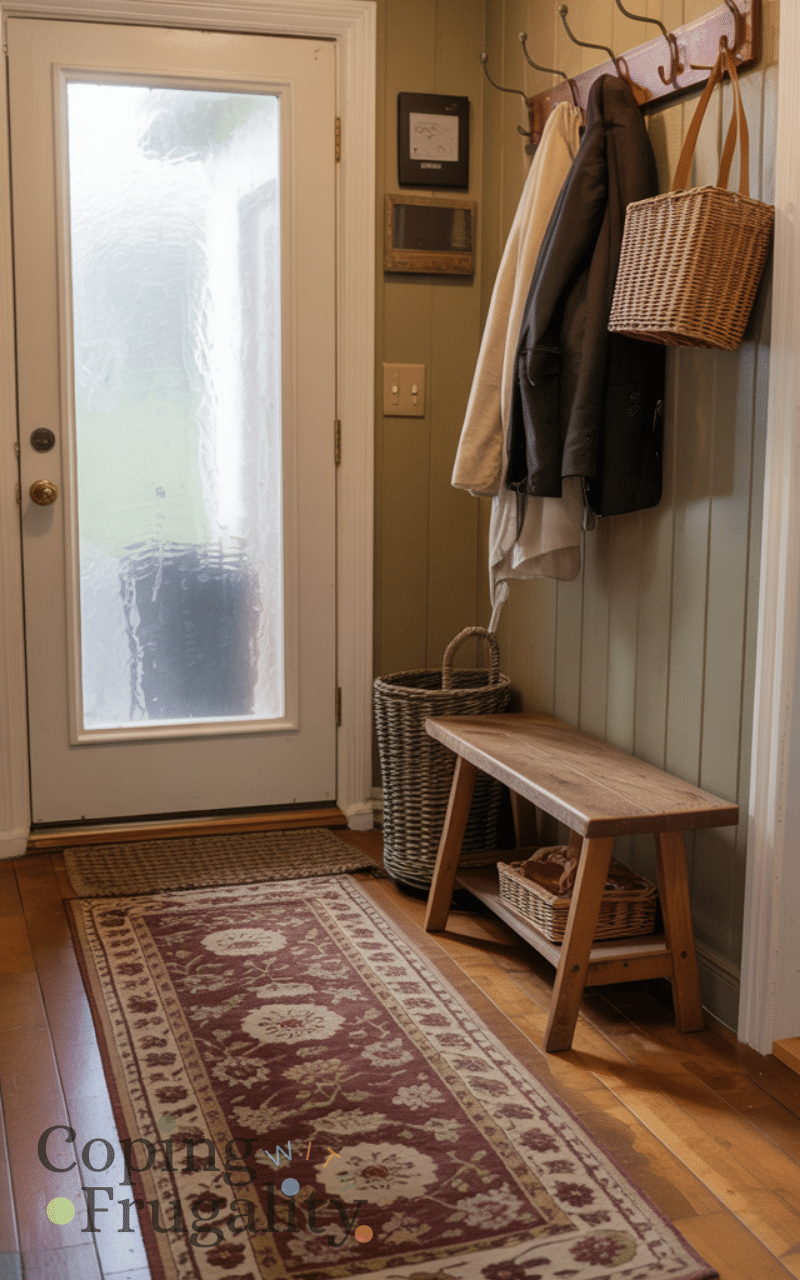
Repurposing is a creative way to approach entryway rug styling on a budget. If you already own a rug that no longer fits another room, consider using it in the entryway. Smaller rugs, kitchen mats, or even hallway runners can work perfectly. This approach costs nothing and gives new life to items you already have, making your décor more sustainable and budget-friendly.
Before buying anything new, I now shop my own house first. Repurposing costs $0, which is always my favorite number. I’ve moved kitchen runners into the entry more than once with great results. I recommend giving it a deep clean before relocating it. The mistake is assuming an entry rug has to be brand new — sometimes it just needs a new home.
3. Use Vintage or Secondhand Rugs
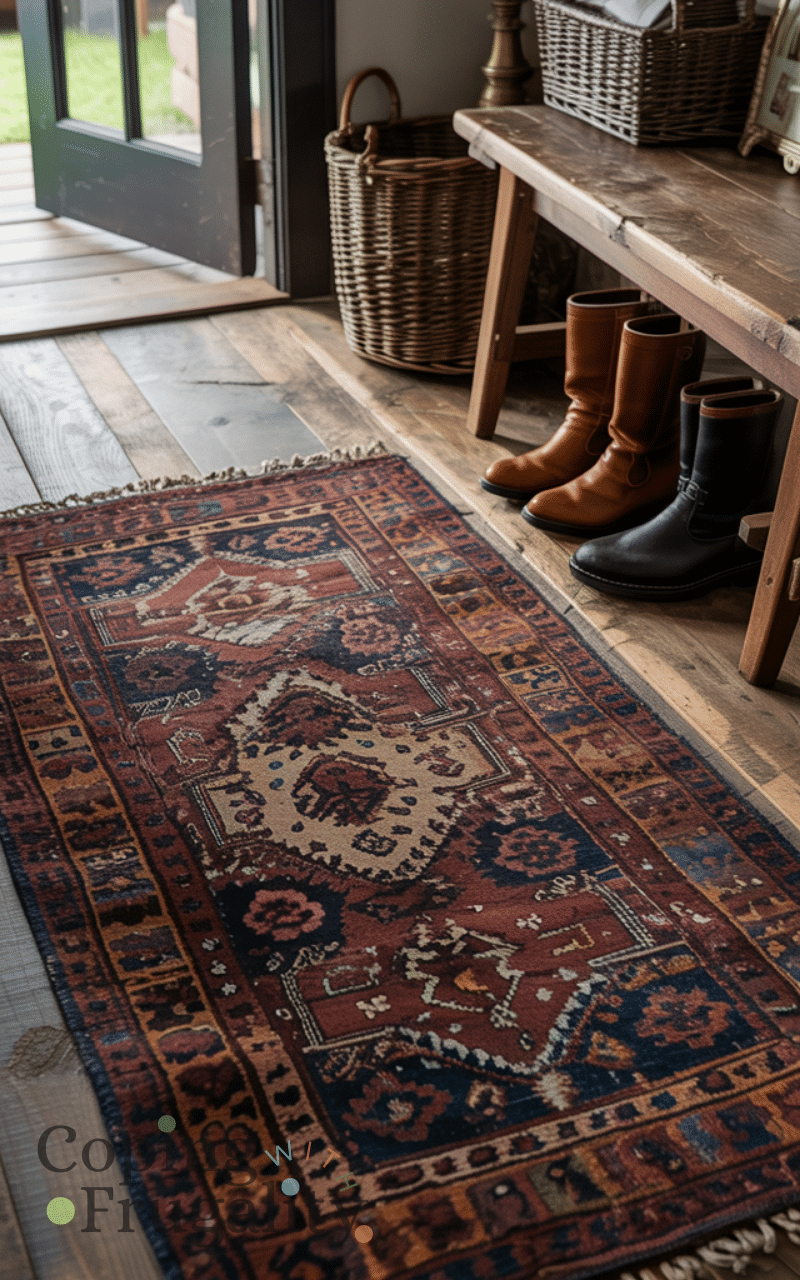
Secondhand shopping is excellent for entryway rug styling on a budget. Thrift stores, flea markets, and online marketplaces often have unique rugs at low prices. Vintage rugs add character, warmth, and charm that new rugs sometimes lack. With a good cleaning, a secondhand rug can look stunning and provide a one-of-a-kind style without breaking your budget.
Secondhand rugs are where you find real character. I’ve scored beautiful ones between $25–$150, far below retail prices. My tip is checking for wear in high-traffic areas before buying. Personally, I love slightly faded vintage patterns because they hide dirt beautifully. The mistake is skipping a proper cleaning after purchase — always sanitize before bringing it inside.
2. Stick to the Right Rug Size
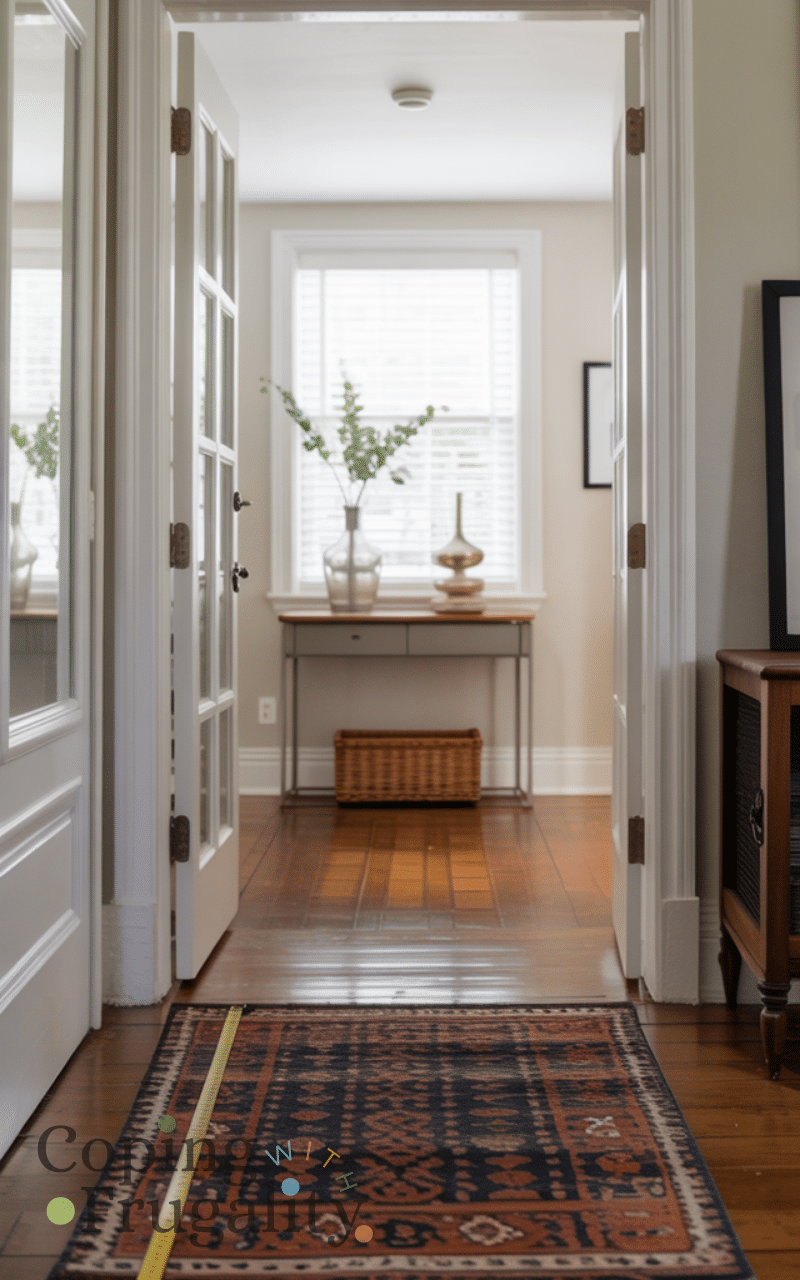
Choosing the correct size is essential for entryway rug styling on a budget. A rug that is too small can look awkward, while one that is too large can be unnecessarily expensive. Measure your entryway carefully to avoid wasting money. The right size creates balance, protects flooring, and makes your entryway feel intentional and well-designed without extra cost.
Getting the size right matters more than anything. I’ve wasted money on rugs between $40–$180 simply because I guessed instead of measuring. My rule now is leaving consistent space around the edges for balance. I recommend sizing up if you’re between two options — too small almost always looks awkward. The mistake is choosing based on price alone instead of proportion.
1. Let the Rug Be the Main Statement
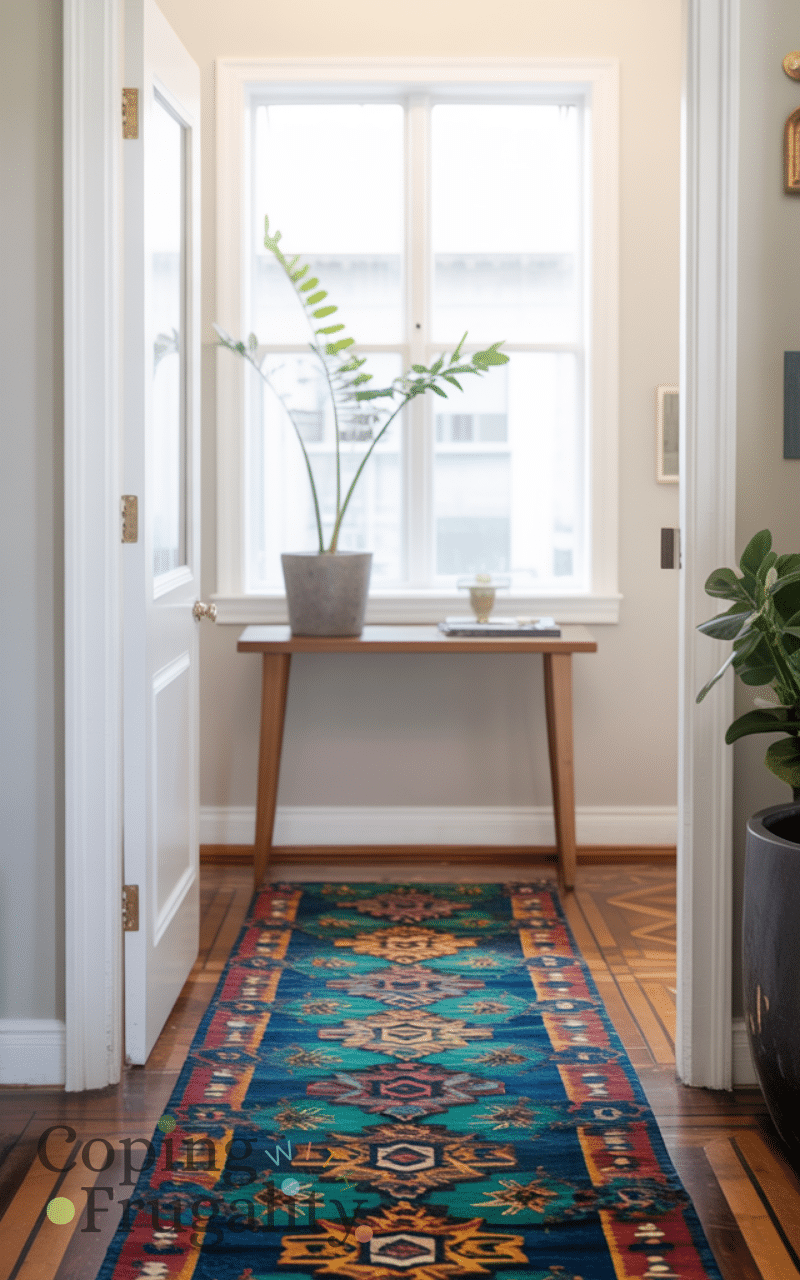
Making the rug the focal point is the smartest approach to entryway rug styling on a budget. Instead of spending money on multiple decorations, choose one eye-catching rug and keep the rest of the décor simple. A bold color or pattern instantly elevates the space, creating impact without additional expenses. This strategy keeps your entryway stylish, uncluttered, and budget-friendly.
When I let the rug carry the visual weight, everything else felt simpler. A statement rug might cost $80–$250, but it saves money on extra decor. My money-saving strategy is keeping walls and accessories neutral so the rug shines. I genuinely believe one strong piece works better than layering multiple small accents. The mistake is competing with it by adding too many bold elements nearby.
Conclusion: Entryway Rug Styling on a Budget Made Easy
With thoughtful choices and smart shopping, entryway rug styling on a budget is both achievable and rewarding. From layering and repurposing to choosing durable materials and classic designs, these ideas prove that style does not require high spending. If you enjoyed this guide and want more affordable home décor tips, make sure to subscribe to my blog and stay inspired with easy, budget-friendly styling ideas for every space in your home.