
Everything can be done with budget
15 Brilliant Decorating with Fewer Items Ideas on a Budget

When I first started thinking seriously about Decorating with Fewer Items, I realized it wasn’t about buying more things to “fix” a space. It was about editing what I already had. In a small living room and kitchen layout, especially in a city apartment, energy shifts instantly when I stop displaying everything and start being intentional. After obsessing over details in spaces like a Minimal Bathroom, I’ve learned that fewer, larger, more cohesive pieces always feel calmer than lots of small, mismatched ones competing for attention.
For me, Decorating with Fewer Items means putting things in something instead of on something. I try to hide everyday clutter behind doors, inside cabinets, or in storage coffee tables instead of letting it live on open shelves. When shoes, cleaning tools, bags, and random decor are tucked away, the room suddenly breathes. I don’t see chaos anymore. I see flow. Even swapping multiple small art pieces for one large statement piece can completely change the mood without adding more stuff.
What I love most about Decorating with Fewer Items is how it improves both storage and energy at the same time. I don’t need ten decorative objects if one strong, intentional piece will do. I don’t need cluttered windowsills if soft curtains can add texture instead. When I lean into Decorating with Fewer Items, I notice the space feels lighter, more expensive, and honestly more “me.” It’s not about emptiness. It’s about clarity, function, and choosing pieces that actually deserve to be seen.
Why you need to choose these Decorating with Fewer Items Ideas
Adopting the idea of Fewer Items can transform your space and simplify your life. By focusing on what truly matters, you reduce clutter and make it easier to organize your surroundings. This approach encourages mindfulness, letting you prioritize quality over quantity and create a more calming, functional environment.
Some helpful tips to consider
Start by evaluating what you actually use and love, then remove items that are unnecessary or duplicate. Consider versatile pieces that serve multiple purposes and embrace a minimalist mindset when adding anything new. Small changes, like decluttering drawers or limiting decorative objects, can make a big difference in achieving a clean, intentional space.
15. Minimalist Wall Art
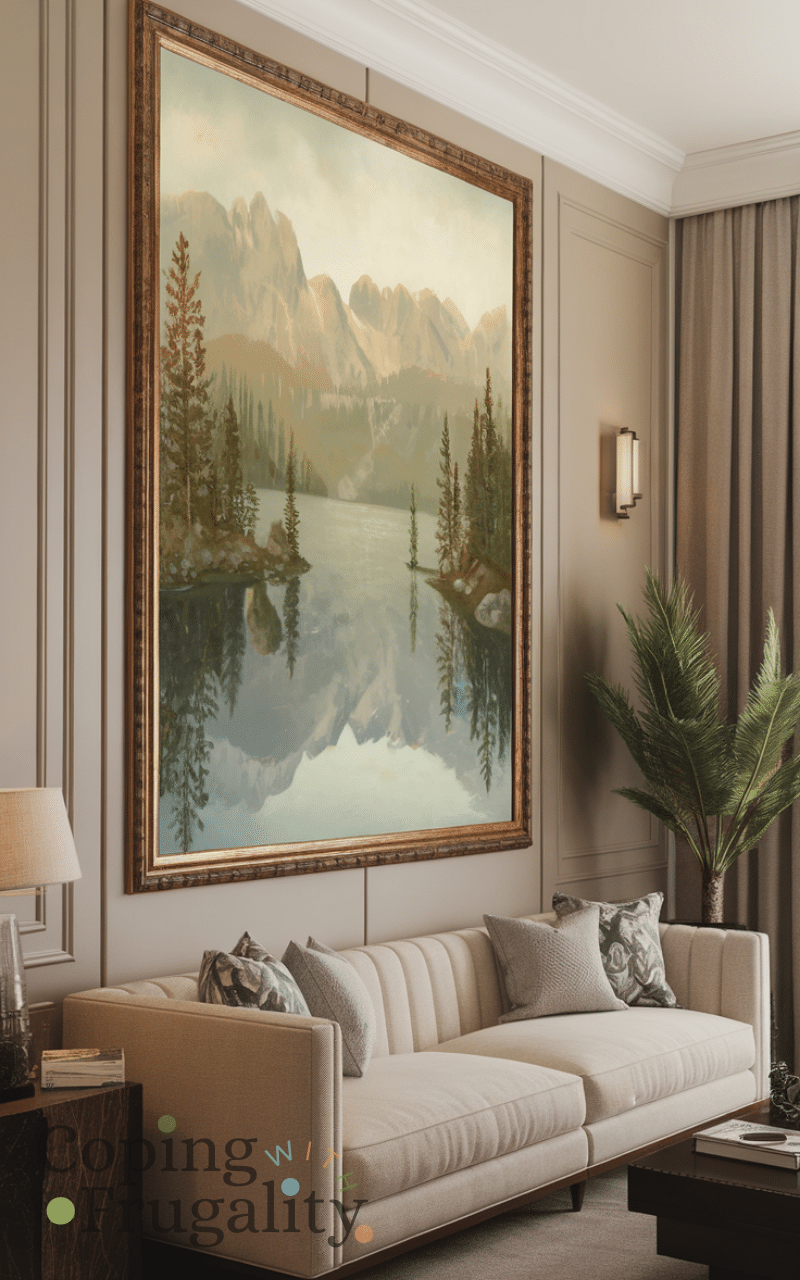
Using a single, striking piece of wall art can transform a room without overcrowding it. Choosing one bold painting or framed photo allows you to focus on quality rather than quantity, perfect for decorating with fewer items on a budget. It draws the eye and sets the tone of the space while keeping costs low. In smaller spaces, one large art piece can make the room feel complete and stylish without extra clutter. This approach emphasizes thoughtful decorating with fewer items while staying friendly to your wallet.
I’ve found that investing in one bold piece of wall art makes me feel like a real curator in my own home. You can find something striking for anywhere between $50–$300, depending on whether you shop online or at local galleries. I save money by checking thrift stores or Etsy for unique pieces—I’ve scored some amazing originals this way. My biggest recommendation? Go for something that sparks joy every time you walk in the room, even if it’s unconventional. A common mistake people make is trying to fill the wall with multiple small pieces; it ends up feeling cluttered rather than curated.
14. Statement Lighting
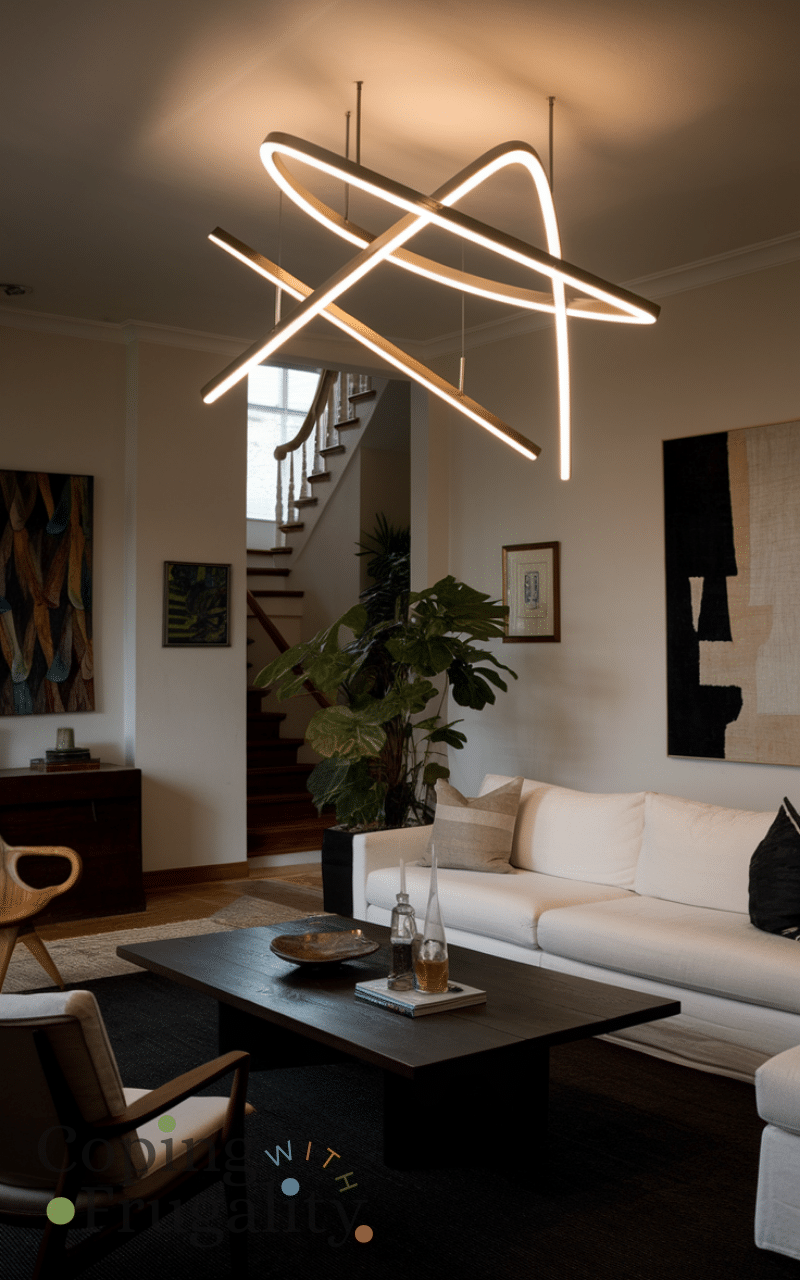
A unique light fixture can serve as both function and decoration. Swapping multiple small lamps for a single statement chandelier, pendant, or floor lamp saves space and money. This approach highlights decorating with fewer items on a budget by investing in one standout piece that elevates your room’s look. Statement lighting creates a focal point and adds personality to any room, making it feel cozy, modern, or elegant depending on your style.
I never realized how much a single light fixture could change the vibe of a room until I swapped out all my little lamps for one pendant chandelier. You can spend $100–$500 for a really impactful fixture, but I got mine on clearance for under $150. One tip: keep the wiring and installation in mind to avoid hidden costs. Personally, I think a statement light should feel like art—it’s worth splurging on a piece you’ll love daily. Many people make the mistake of picking something too small or generic, which gets lost in the room.
13. Simple Decorative Trays
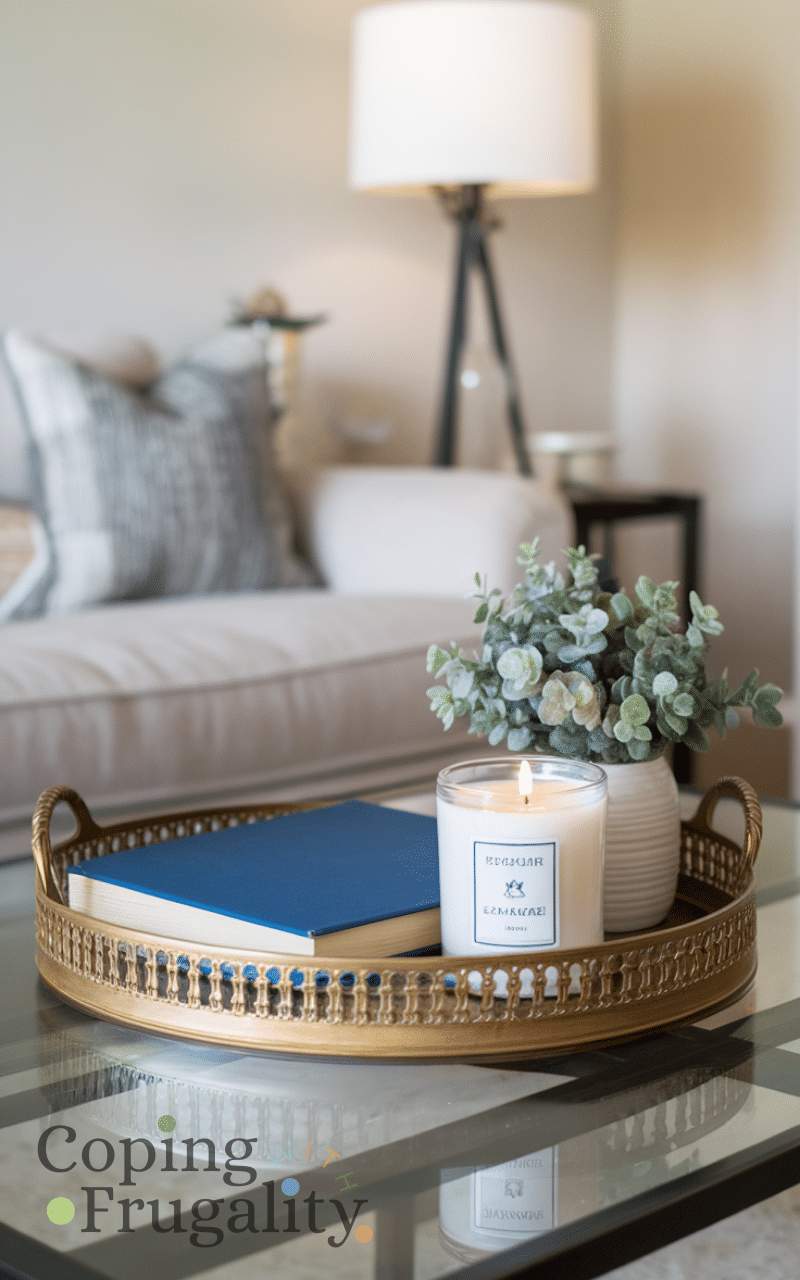
Decorative trays are versatile and budget-friendly accents. Use a single tray on a coffee table or dresser to hold candles, books, or small plants. This strategy embodies decorating with fewer items on a budget because it organizes essentials while adding style. By grouping items neatly, a tray reduces visual clutter and gives the impression of a well-thought-out design with minimal pieces.
I love trays because they make even everyday clutter look intentional. You can find a stylish tray for $15–$60, depending on material. A simple money-saving move is to repurpose trays from kitchenware sections instead of home decor stores. I highly recommend choosing one with a neutral tone—it blends effortlessly anywhere. A mistake I’ve made before is piling too much on a tray, which defeats the calming effect.
12. Accent Pillows
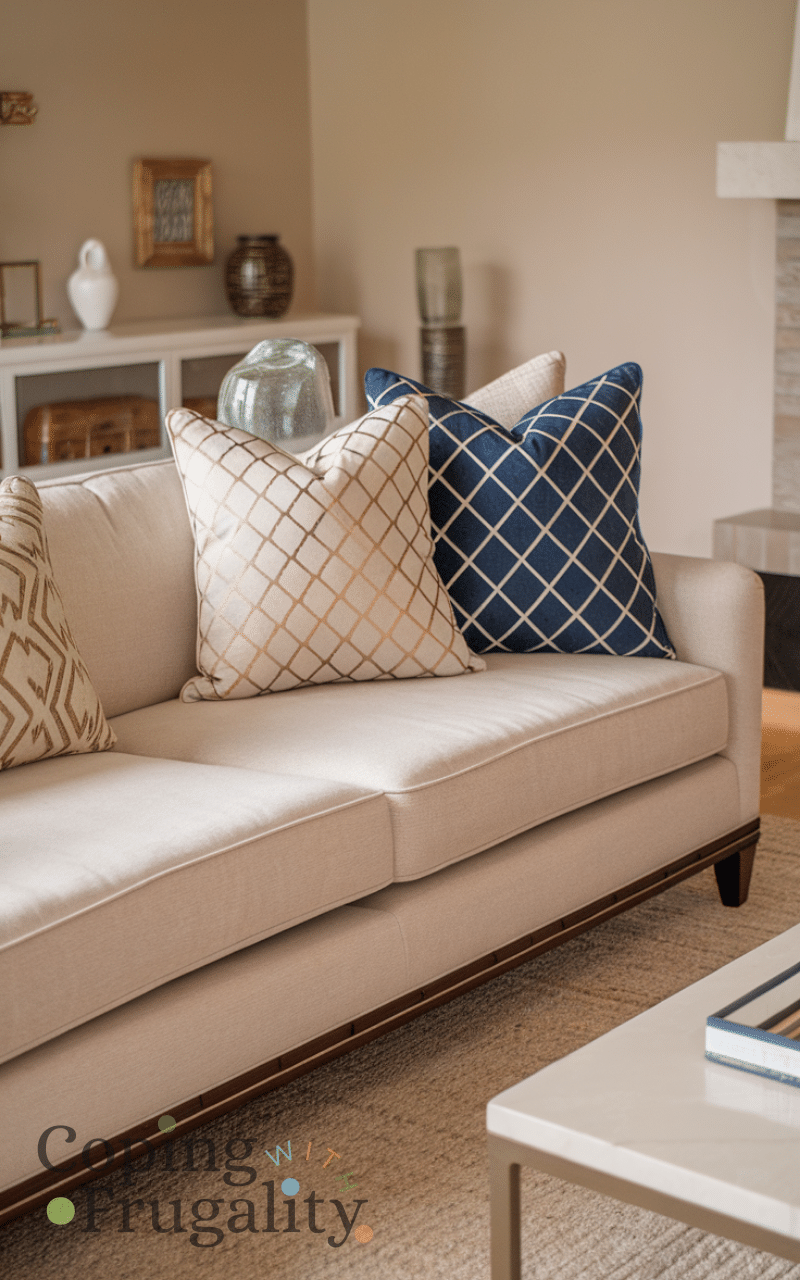
Adding a few carefully chosen accent pillows can refresh a room without buying a lot of decor. Stick to neutral tones or a small color palette for a cohesive look. Accent pillows are ideal for decorating with fewer items on a budget because they are inexpensive yet impactful. They create comfort and style without the need for multiple decorative objects.
I never underestimate the power of a few well-chosen pillows. You can refresh a room for as little as $20–$80 per pillow. My tip? Swap out pillow covers seasonally rather than buying new ones constantly—it’s cheaper and keeps things fresh. I strongly suggest sticking to a cohesive color palette; mismatched patterns can undo the whole minimalist vibe. People often err by buying too many; just a few strategic pillows make a bigger impact.
11. Floating Shelves with Minimal Items
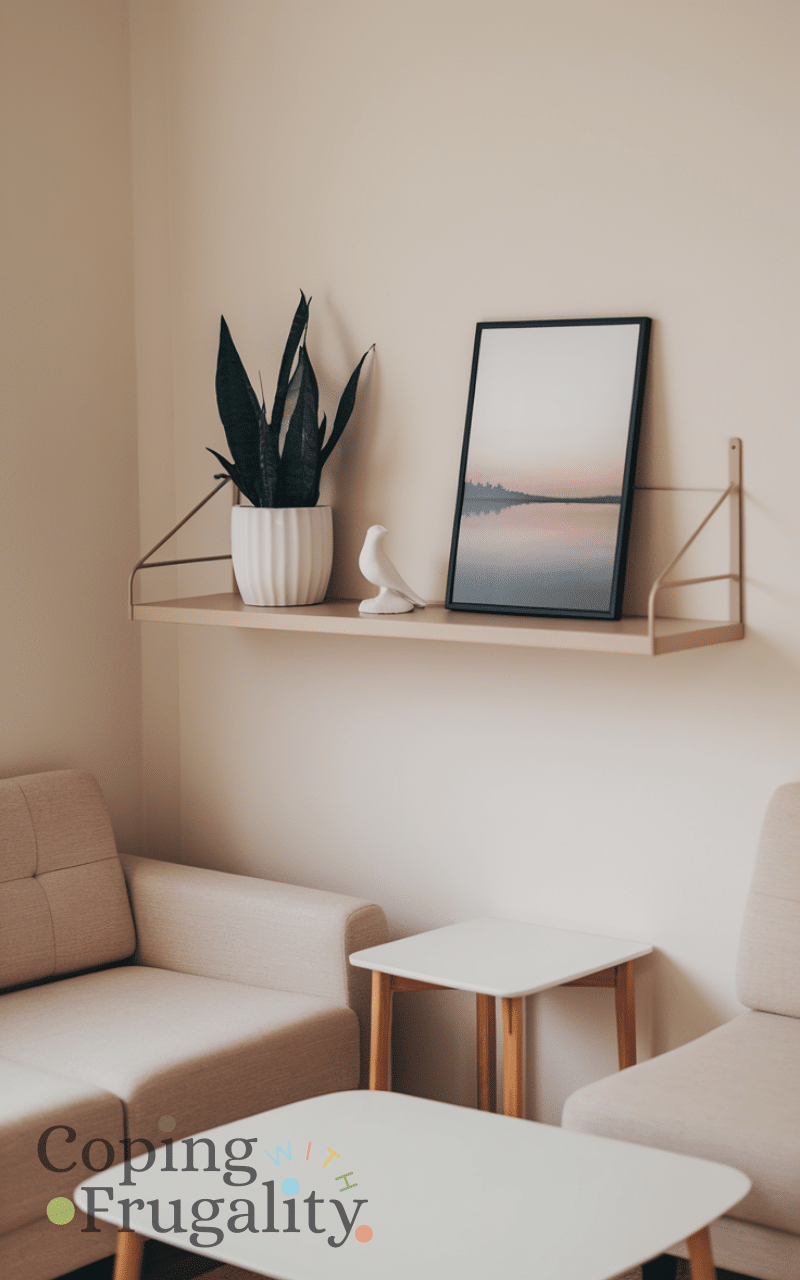
Floating shelves can display a few cherished items like a plant, a photo frame, or a small sculpture. In decorating with fewer items on a budget, it’s better to showcase selected pieces instead of cluttering the shelf. This approach creates visual interest and keeps your space feeling open and airy, emphasizing quality over quantity.
Floating shelves changed how I showcase my favorite pieces. A set of shelves costs anywhere from $25–$150, depending on size and material. I save money by using brackets and reclaimed wood from old furniture. I always recommend leaving plenty of negative space—it makes each item stand out. The common pitfall? Overloading shelves with “nice-to-have” objects; less truly is more here.
10. One Large Rug
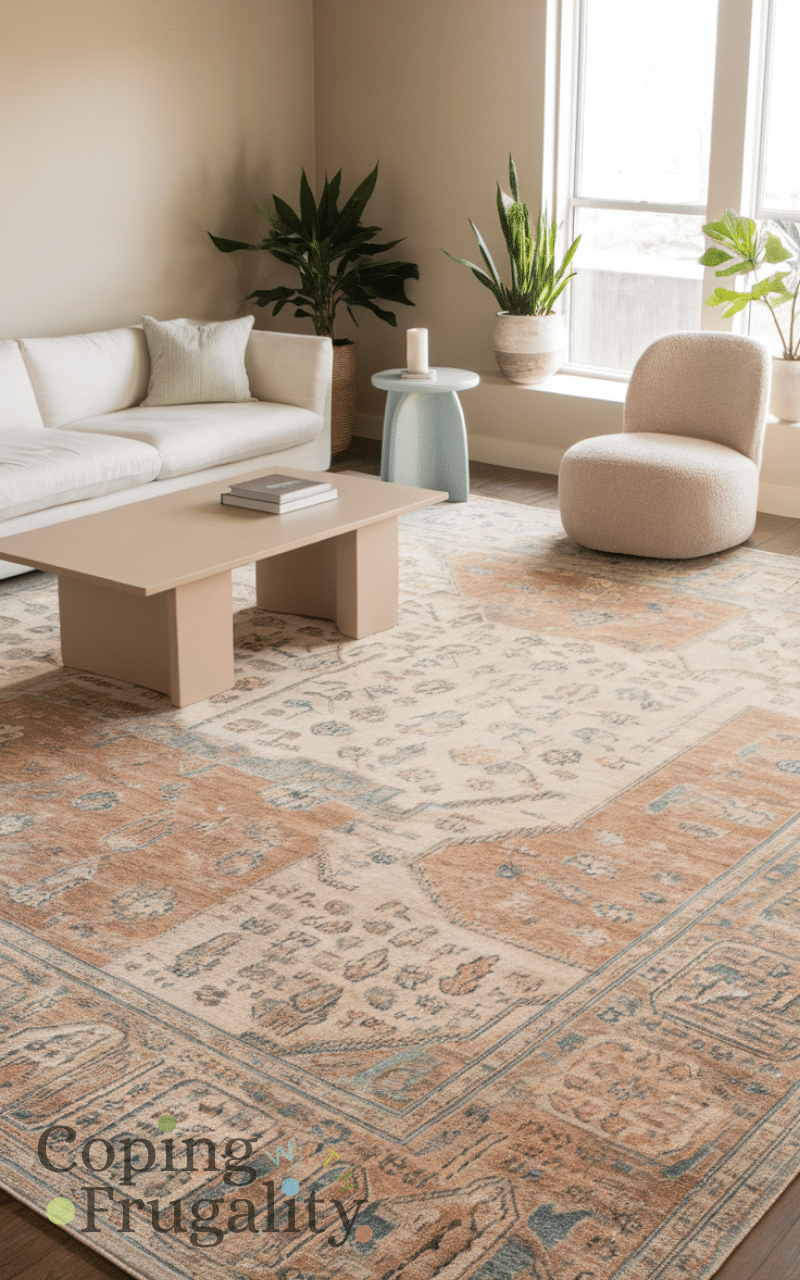
Instead of layering multiple small rugs, invest in one large area rug to anchor your furniture and add texture. This simple strategy works perfectly for decorating with fewer items on a budget. A well-chosen rug can define the space, tie colors together, and make your room feel finished without extra accessories.
Investing in one large rug instead of multiple small ones is a game-changer. You can spend $100–$600 depending on material and size. I save by checking discount outlets or seasonal sales online. My advice: pick a neutral rug with subtle texture—it anchors the room without fighting for attention. Many people mistakenly layer too many small rugs, which makes the space feel fragmented.
9. Single Statement Mirror
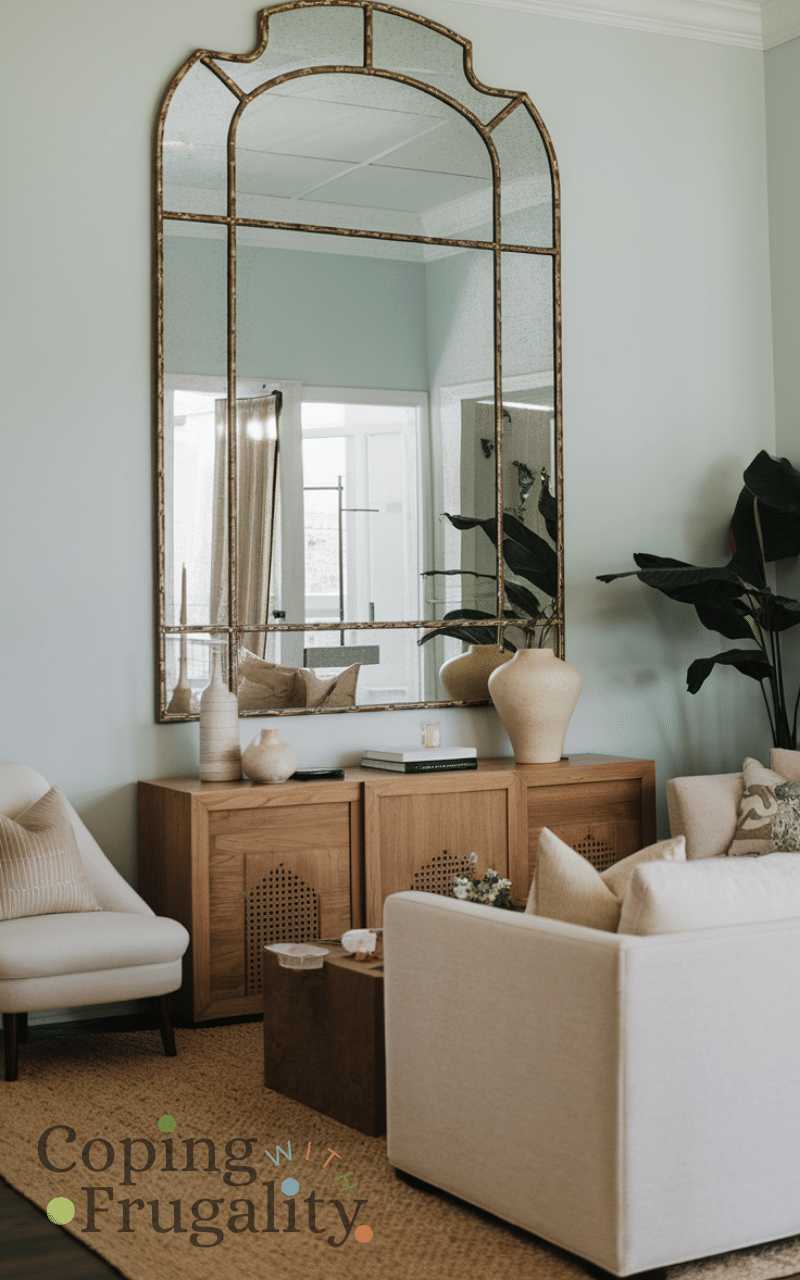
A large mirror not only reflects light but also acts as a decorative piece. Opting for one stylish mirror is a clever way of decorating with fewer items on a budget. It adds depth, opens up the space, and replaces the need for multiple decorative objects while enhancing the room’s style.
A single mirror can completely open up a space. A stylish one ranges from $80–$400. My money-saving tip is to watch for floor models or second-hand options—they can look brand new. I recommend choosing a mirror with a frame that doubles as art, so it doesn’t just reflect but elevates the room. A common error is using multiple small mirrors thinking it’s trendy; it often looks busy instead of polished.
8. Potted Plants
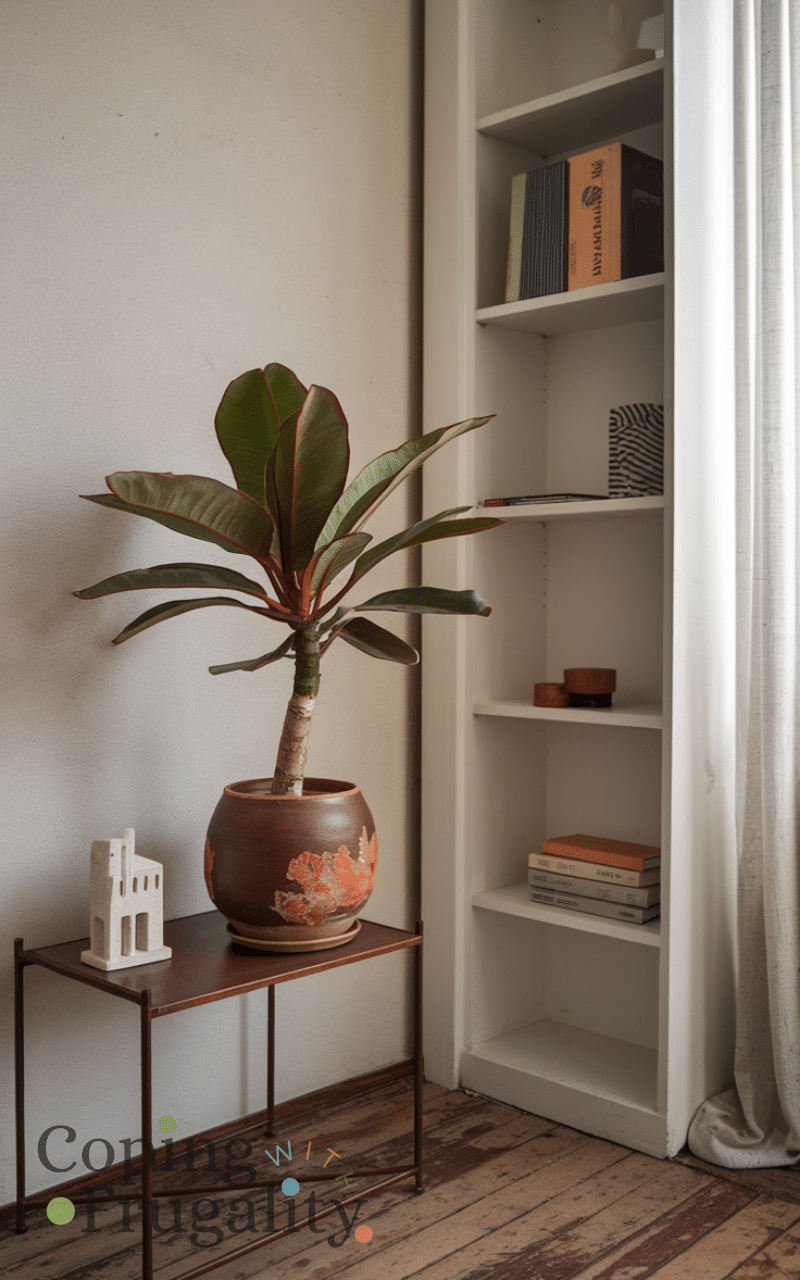
Instead of dozens of small plants, choose one or two larger potted plants to add life to your room. This is a cost-effective strategy for decorating with fewer items on a budget. Plants bring color, texture, and freshness while maintaining a minimalist aesthetic that looks curated rather than cluttered.
I like going big with just one or two plants—they feel more intentional than a jungle of tiny pots. Expect to spend $30–$150 per plant, depending on size and species. I save by propagating plants from friends or local swaps. My recommendation is to pick low-maintenance varieties like fiddle leaf figs or snake plants for impact without stress. The usual mistake? Buying too many small plants that feel chaotic rather than curated.
7. Single Statement Furniture Piece
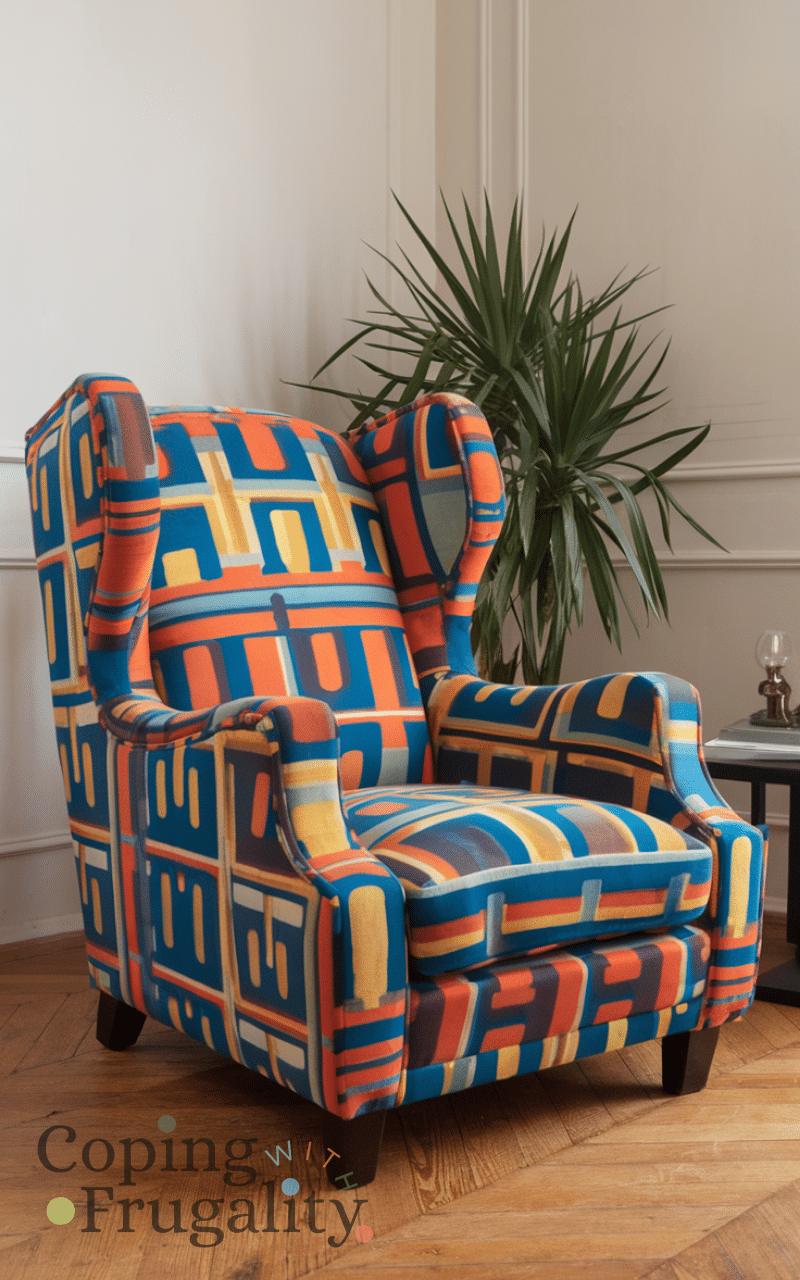
One unique furniture item, like a bold armchair or colorful ottoman, can serve as both decor and function. This idea highlights decorating with fewer items on a budget because you get impact without buying multiple decorative pieces. Statement furniture makes your space feel intentional and stylish.
One bold chair or ottoman can define a whole room. These pieces usually cost $200–$800, but hunting for sales can cut the cost in half. I always advise prioritizing comfort as much as style—it should be both usable and eye-catching. Many people make the mistake of buying multiple accent chairs or small items instead of one impactful piece; it waters down the design.
6. Wall Decals or Stickers
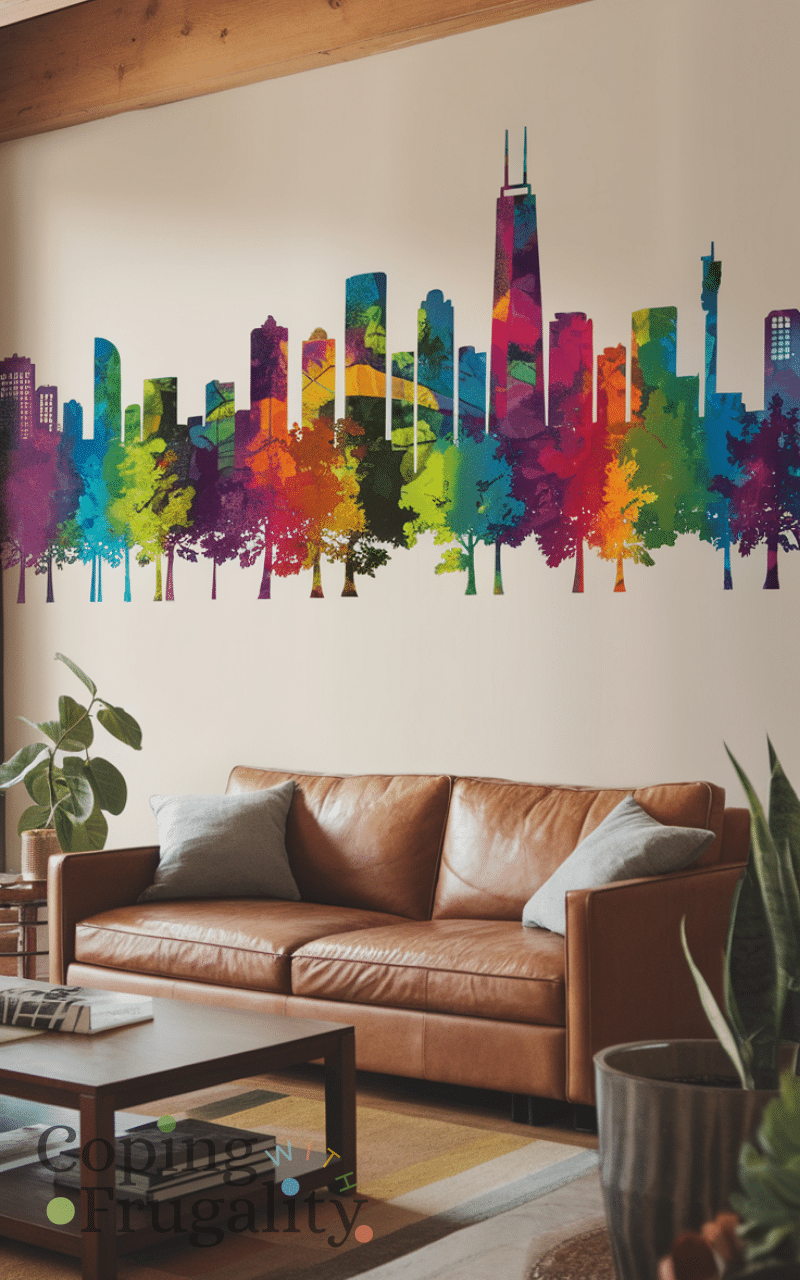
Instead of filling walls with frames or shelves, try a large wall decal or sticker. It’s an affordable way to decorate with fewer items on a budget while adding personality to your room. Decals are easy to apply and remove, giving you a decorative solution that doesn’t require extra furniture or accessories.
Wall decals are my secret weapon for adding personality without extra furniture. Prices range from $15–$60 for a large, good-quality decal. I save money by checking print-on-demand shops rather than high-end decor stores. I recommend a decal with a statement or pattern that feels personal to you—it’s like inexpensive artwork. The mistake to avoid? Overcrowding the wall with multiple small decals; it instantly looks messy.
5. Curated Book Display
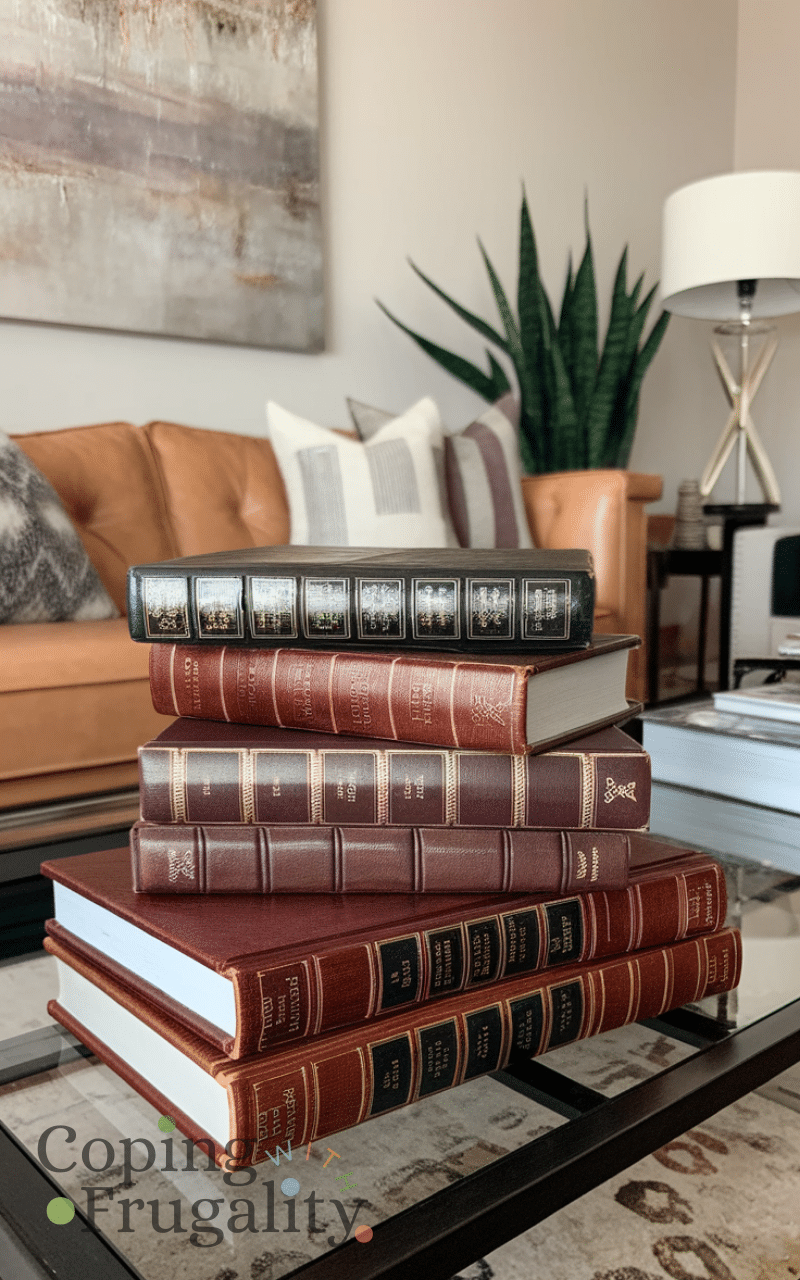
Select a few books with beautiful covers and stack them on a coffee table or shelf. Decorating with fewer items on a budget works perfectly here: a small curated collection adds style without overcrowding surfaces. This approach emphasizes intentional decor and makes your space look thoughtful and organized.
I love stacking a handful of books with beautiful covers instead of lining every shelf. You can do this on a budget of $10–$50 per book if you thrift or shop online. My saving tip: choose second-hand books in great condition—they look chic without the price tag. I always recommend arranging them by color or size for a cohesive look. People often overcrowd their shelves, forgetting the charm is in restraint.
4. Monochrome Decor
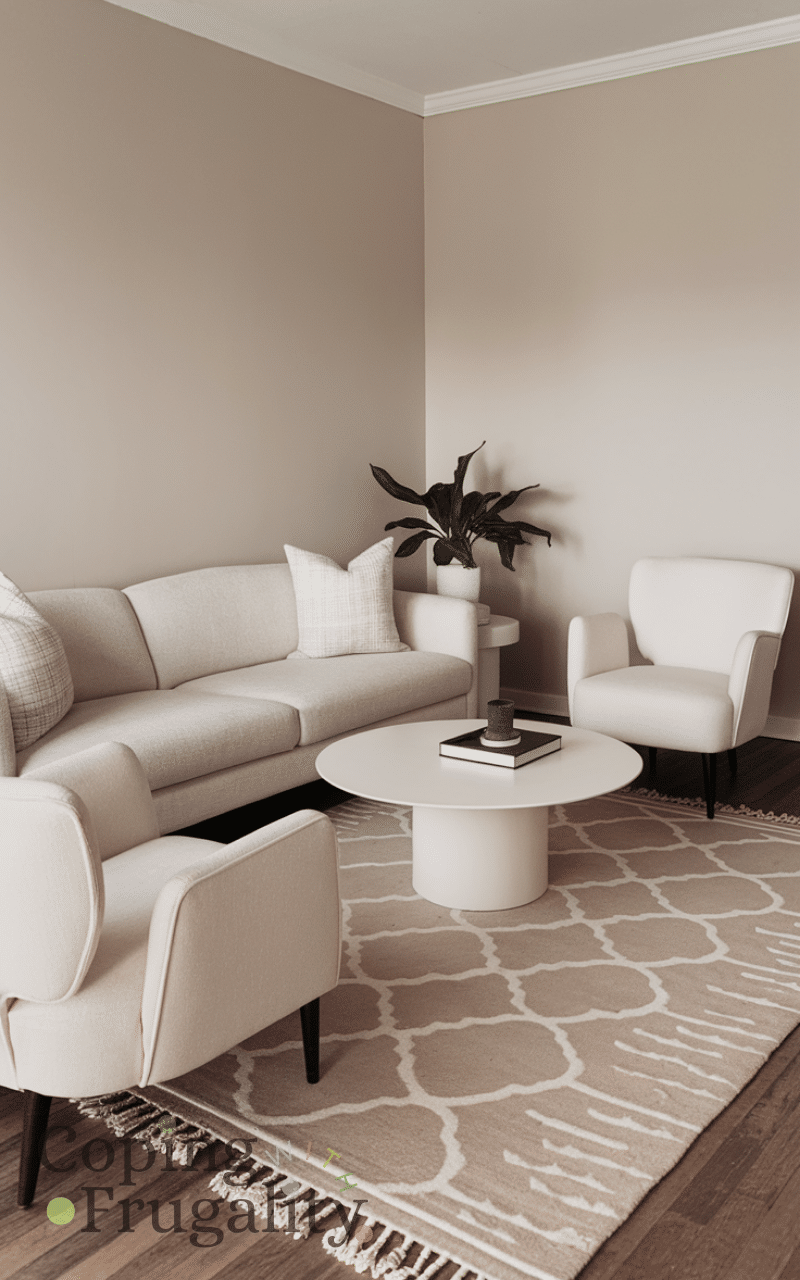
Using a single color palette throughout a room reduces the need for multiple decorative items. Monochrome decor is ideal for decorating with fewer items on a budget because it allows each piece to stand out while creating cohesion. This approach creates a calm, elegant space without requiring extra accessories.
Sticking to one color palette is my favorite trick to make a small space feel sophisticated. This can be done for $50–$300 if you swap a few accent pieces. I save by using what I already own and just reworking it within the color scheme. My strong opinion? Don’t shy away from deep textures or patterns within the palette—it keeps things interesting. A mistake I see often is mixing too many tones, which ruins the clean, intentional vibe.
3. Wall-Mounted Hooks
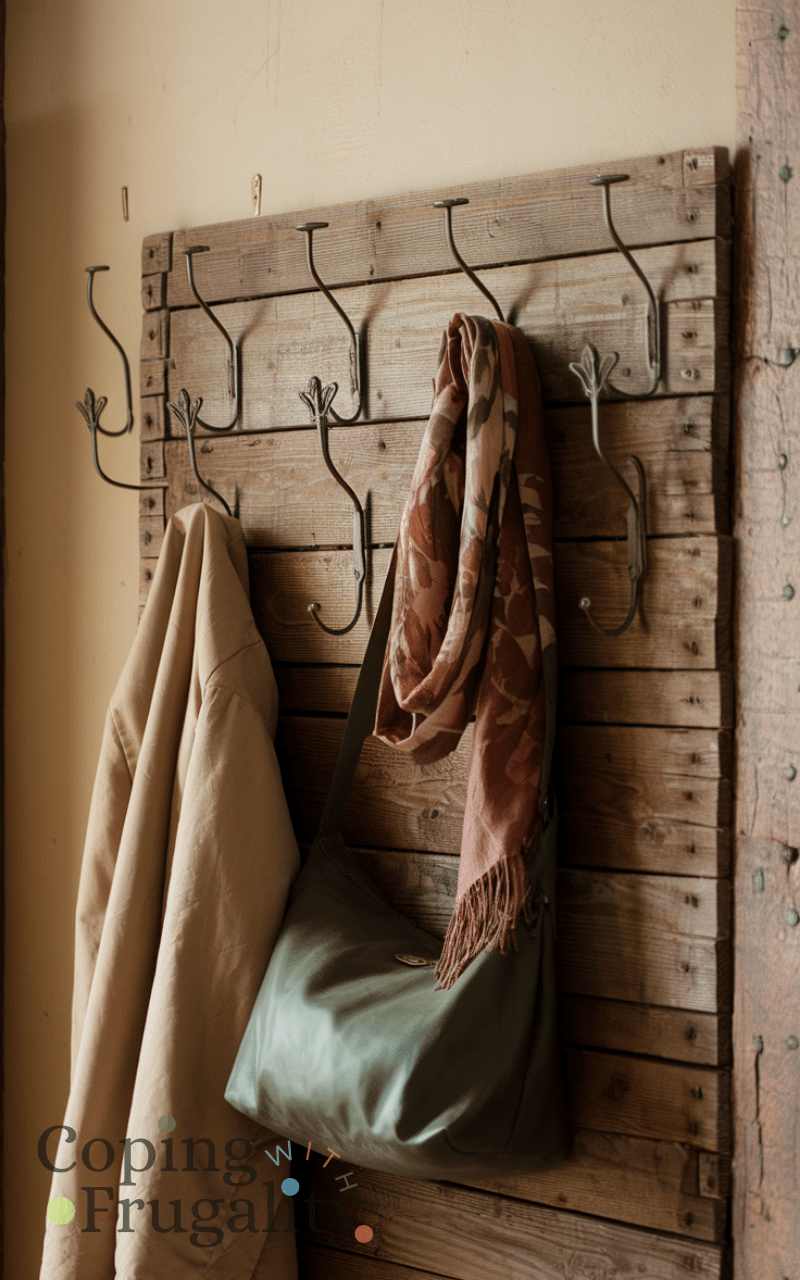
Wall hooks can serve both function and style. Hang a decorative coat, bag, or scarf to reduce the need for multiple storage or decor pieces. In decorating with fewer items on a budget, functional decor like hooks saves space and keeps your room tidy while adding visual interest.
Hooks are simple but transformative. A set costs $15–$80 depending on style and material. I save money by DIY-installing them rather than hiring someone. My tip is to use them for both function and decor—a sculptural hook can hold bags and look stylish. Many people install too many at random heights; spacing them thoughtfully makes a real difference.
2. Minimalist Centerpiece
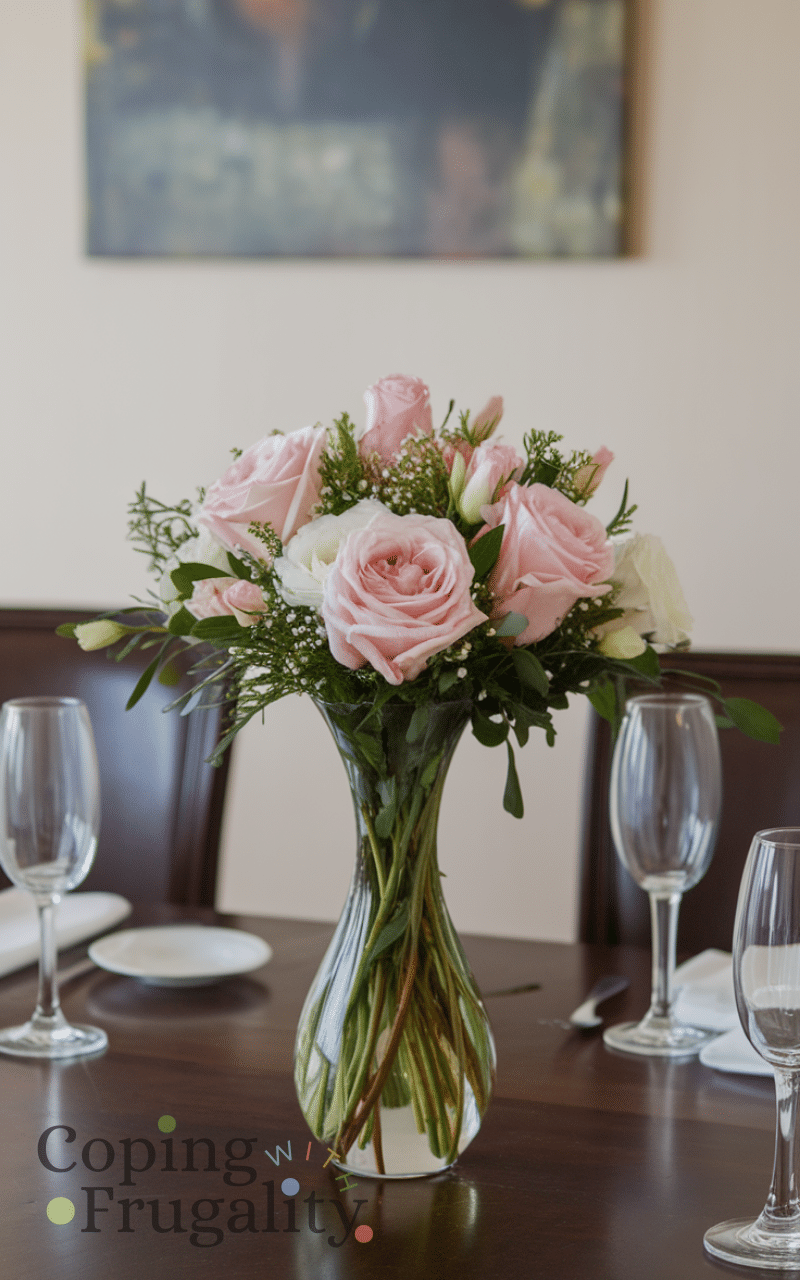
A single centerpiece on a dining table or console, like a vase with fresh flowers or a decorative bowl, is enough to complete the look. This reinforces the concept of decorating with fewer items on a budget by focusing on one statement element rather than filling the space with multiple objects.
I swear by a single vase or bowl on my dining table—it’s calming and visually impactful. Budget-wise, $20–$100 gets you a piece that looks elegant. I save by shopping local markets or even DIYing a ceramic bowl. My advice? Rotate items seasonally to keep it fresh without extra clutter. A mistake I’ve made is overdecorating the table, which competes with the room instead of enhancing it.
1. Decluttered Surfaces
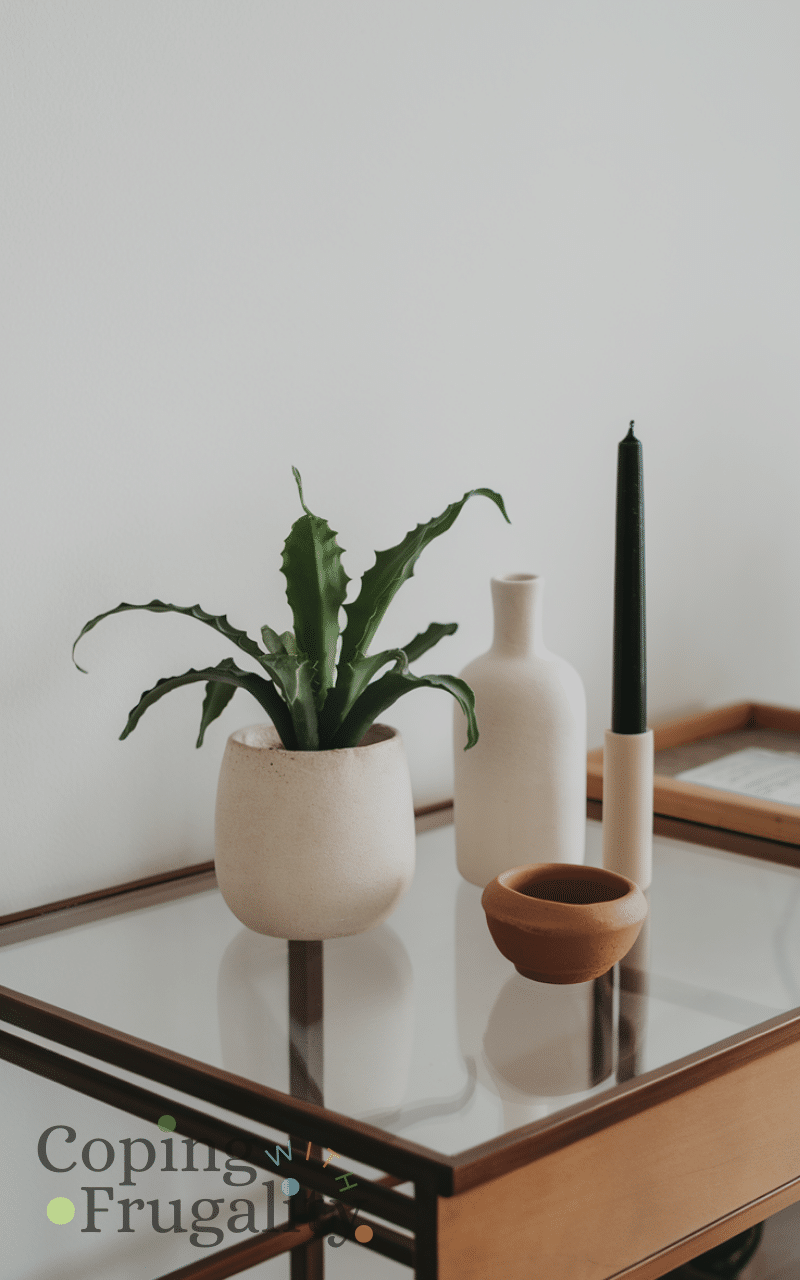
The most important tip for decorating with fewer items on a budget is leaving surfaces mostly clear. A clean tabletop, shelf, or dresser allows the few items you have to stand out. This minimalist approach enhances the feeling of space, reduces stress, and showcases intentional decor choices. Less really is more!
This is my number-one rule: leave space to breathe. It costs nothing but effort to keep surfaces mostly clear. My money-saving tip: repurpose storage boxes or baskets to hide daily clutter instead of buying fancy organizers. I always recommend committing to the habit—it really changes how your home feels. People often fail by keeping a “few extra items” on surfaces; it quickly erodes the minimalist effect.
Conclusion
Decorating with fewer items on a budget proves that you don’t need a lot to make a space feel beautiful. By choosing statement pieces, curating items thoughtfully, and embracing minimalism, you can transform your home into a stylish, organized haven. Try these tips and enjoy a fresh, budget-friendly approach to home decor. Don’t forget to subscribe to my blog for more creative ideas on decorating with fewer items on a budget!